Bistecca alla Fiorentina
Ask my father how he likes his steak, and he will simply stare at you, because in this house there has only ever been one correct answer, and it isn't really a question anyone needs to ask. Rare. Thick. Nothing else on the plate competing for attention.
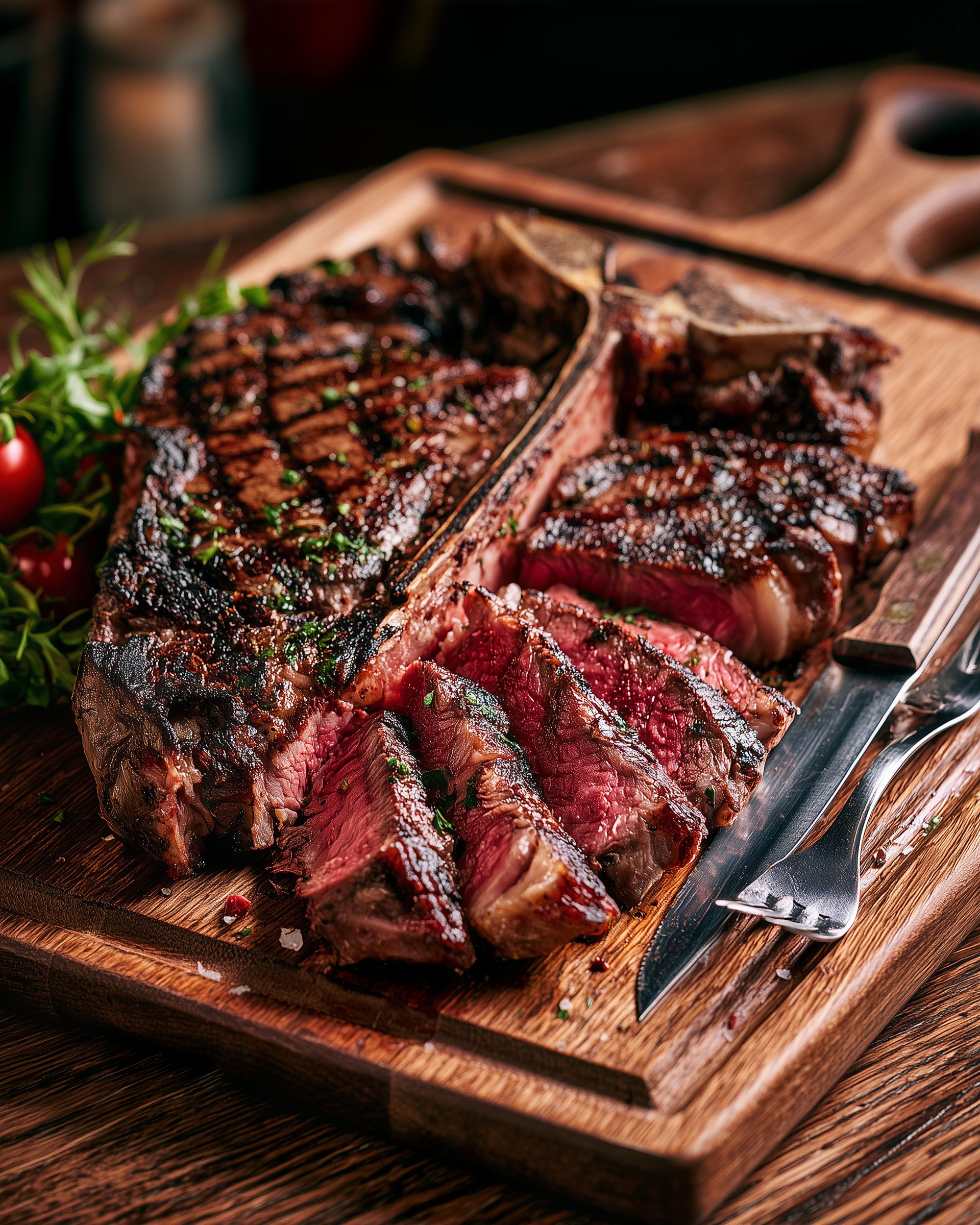
Ingredients
- 1 bone-in T-bone or porterhouse steak, about 1–1.2kg, cut 5–6cm (2–2.5 inches) thick
- Coarse sea salt
- Black pepper
- Extra virgin olive oil
Serves 2–3, traditionally shared rather than plated individually.
Cookware Required
- una griglia a carbone o una padella di ghisa pesante (a charcoal grill or a heavy cast-iron pan)
- le pinze da cucina (kitchen tongs -- never a fork)
Method
Remove the steak from the refrigerator at least an hour before cooking, and let it come fully to room temperature. This matters more here than almost anywhere else in this book -- given the thickness involved, a cold center simply will not catch up to a properly seared outside in the short time this cut wants on the heat. Pat it dry, and season generously with coarse salt only once you're ready to cook, not before.
Get your grill or pan aggressively hot -- hotter than feels reasonable. Sear the steak hard on both flat sides, about four to five minutes per side, turning it only with tongs; a fork punctures the meat and lets the juices you're trying to keep run straight out. Stand it briefly on its side, balanced on the bone, to render a little of the fat there too.
Check for doneness by feel, or with a thermometer if you trust one more than your hand -- you're aiming for around 50–55°C (125°F) at the thickest point, still deeply red and cool at the very center. This is rare, and it is meant to be rare. A proper Florentine kitchen would not serve this dish any further along than medium-rare, and most would simply refuse.
Let it rest for five to ten minutes before carving. Slice the meat away from the bone in thick pieces, and serve with nothing more than a little more coarse salt and a drizzle of good olive oil.
Quando Va Storto
If a proper crust never develops and the surface just grays instead, the grill or pan wasn't hot enough to begin with; a lukewarm cooking surface steams meat rather than searing it, and there's no fixing that once it's underway. If the center comes out overcooked despite a short time on the heat, the steak went on cold rather than at room temperature, so the outside finished its work long before the center had any chance to catch up. And if the meat tastes tough despite being properly rare, it wasn't rested before you cut into it, and everything you were trying to keep inside ran straight out onto the board instead.
Una Storia dalla Sala
A tourist asked, entirely sincerely, whether his bistecca alla fiorentina could be prepared well done, and received, without a moment's hesitation, a warm and utterly final “No” -- which he later told Salvatore was somehow the politest refusal he had ever received in his life. My father explained, once the shock had worn off, that a bistecca cooked all the way through simply stops being the dish he'd ordered, and becomes instead an expensive way to be disappointed.
Served properly rare, as instructed, he called it the best steak of his entire life on his way out the door, and still sends my father a Christmas card most years, which my father keeps, and pretends not to look forward to.