Bruschetta al Pomodoro
This is the dish everyone in this family agrees is impossible to get right in a restaurant, and easy to get right at home, for exactly the same reason: it has nowhere to hide. Four ingredients, none of them cooked longer than it takes toast to turn brown, and every single one of them has to actually be good, or the whole thing falls apart on the way to the table.
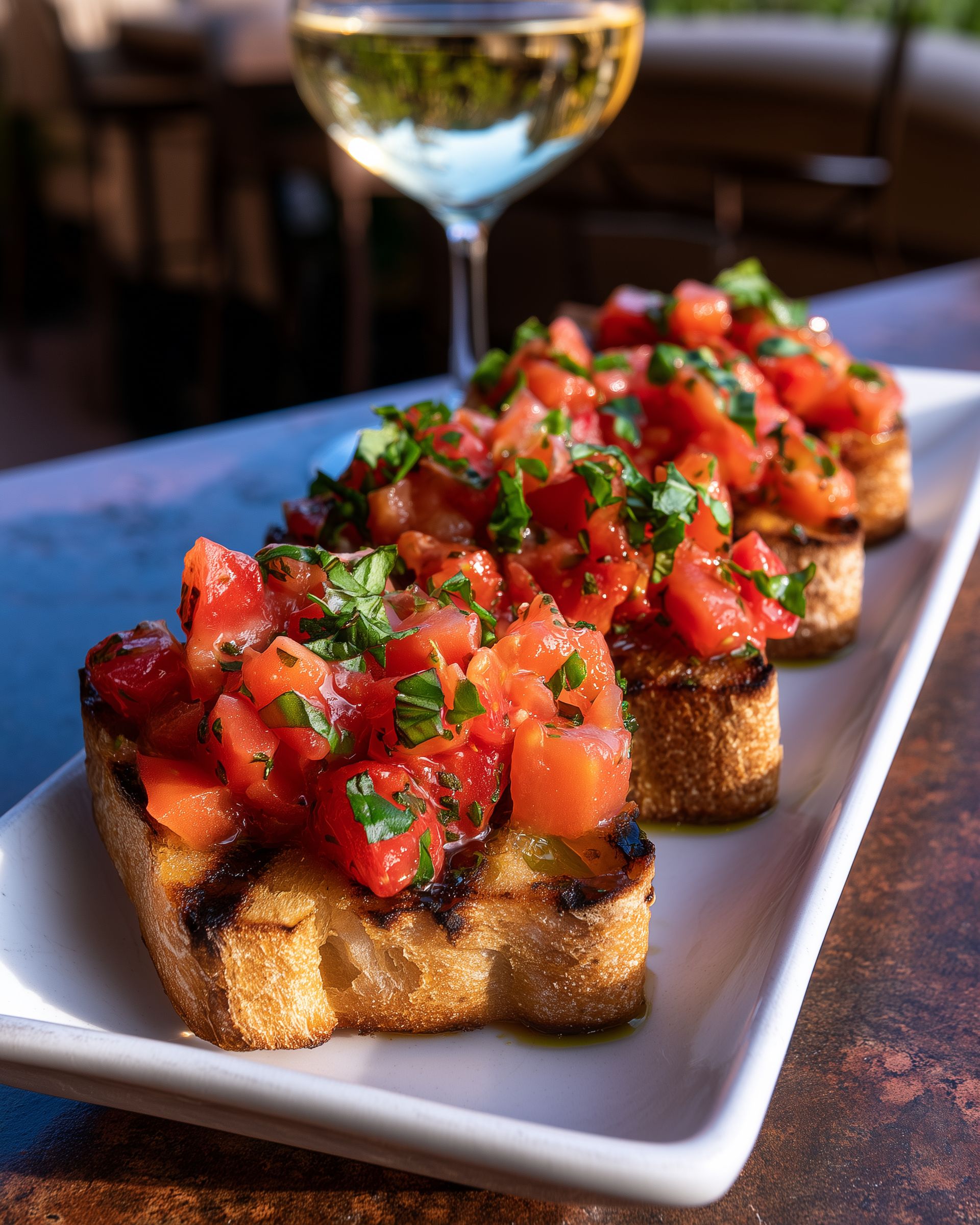
Ingredients
- 4 thick slices country bread (Pane Casereccio, see Chapter 1, works well here)
- 4 ripe tomatoes, diced
- 2 cloves garlic, peeled and left whole
- A handful of fresh basil, torn
- Extra virgin olive oil
- Fine sea salt
Makes 4 bruschette, enough for a small antipasto course.
Cookware Required
- la griglia o la padella scanalata (grill or ridged grill pan)
- una ciotola (a bowl, for the tomatoes)
Method
Dice the tomatoes and place them in a bowl with a good pinch of salt. Let them sit for at least fifteen minutes -- this draws out their liquid and concentrates their flavor at the same time, and skipping this step is the single most common reason bruschetta turns out watery and bland.
Grill or toast the bread until deeply golden and slightly charred at the edges -- a proper char here matters, since a merely warm slice of bread has nowhere near the same character. While it's still hot, rub each slice firmly with a whole clove of garlic; the heat of the bread grates the garlic into it far more evenly than mincing ever could.
Drain off any excess liquid the tomatoes have released, then toss them with the torn basil and a generous drizzle of olive oil. Spoon over the bread, and serve immediately -- bruschetta left to sit turns the bread soggy within minutes, and this is not a dish that improves with patience.
Quando Va Storto
If the bread turns soggy before it reaches the table, either the tomatoes were not drained of their liquid, or the bruschetta sat too long before serving; both are fixable, and neither is forgivable twice. If the garlic tastes raw and sharp rather than mellow, it went onto bread that wasn't hot enough to draw the flavor out gently; a properly toasted slice should still be warm enough to lightly cook the garlic on contact. And if the tomatoes taste flat despite everything else being right, they were the actual problem -- there is no method in this recipe that rescues a bad tomato, only ones that show off a good one.
Una Storia dalla Sala
A man dining alone finished his meal, paid his own bill without incident, and then quietly asked Lucia whether she might also cover the entire dinner of a family at the next table -- complete strangers he had not exchanged a single word with all evening -- on the single condition that nobody tell them until after he'd already gone. He left before that family had even finished their bruschetta, and Lucia waited, as instructed, until his car had genuinely pulled away.
The mother at that table cried, right there, once Lucia finally explained what had happened. We never learned the man's name, and have never had any way of thanking him beyond simply telling the story, which we do, often, usually right before pointing out that this kind of guest exists too.