Calzone di Verdure
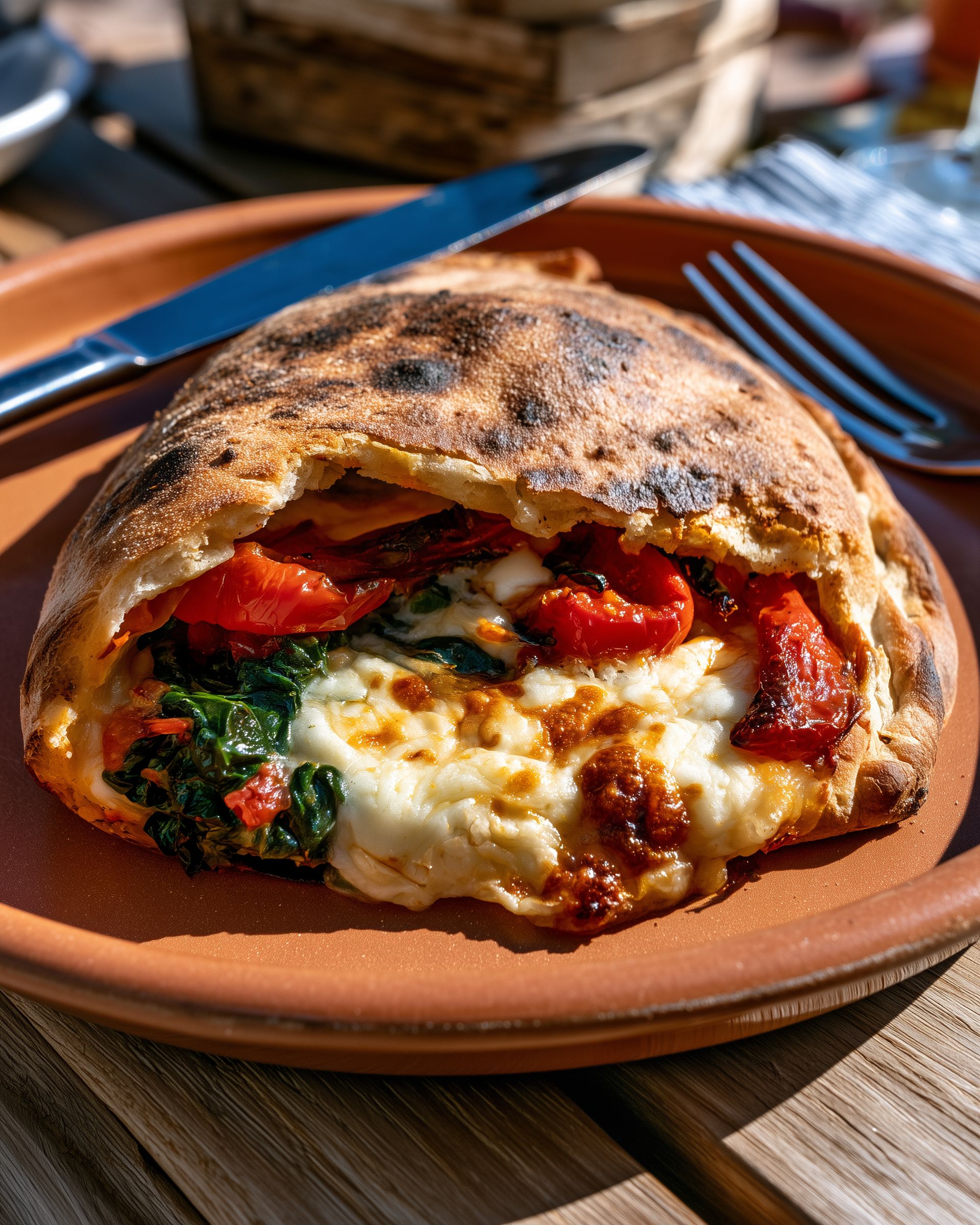
Not every calzone in this restaurant needs meat inside it to earn its place on the menu, and this is the proof -- wilted greens, roasted tomatoes, and enough cheese to hold everything together, folded into the same dough as its meatier cousin. My sister Valentina, who does not eat meat and has heard every possible joke about it from the rest of us, orders this one so often that the kitchen has started making it before she asks.
Ingredients
- 1 ball Impasto per Pizza a Lievitazione Lenta, risen and at room temperature
- 150g Swiss chard or spinach, stemmed and roughly chopped
- 150g cherry tomatoes, halved
- 150g fresh mozzarella (fior di latte), torn
- 100g ricotta, well drained
- 1 clove garlic, minced
- Extra virgin olive oil
- Fine sea salt and black pepper
- Semolina or flour, for dusting
Makes one large calzone.
Cookware Required
- la pietra o l'acciaio refrattario (pizza stone or steel)
- la pala per pizza (pizza peel)
- una padella (a frying pan, for the tomatoes and greens)
Method
Heat your oven the same way you would for the calzone classico a few pages back -- 220°C (425°F), with a stone or heavy sheet inside if you have one, and not a degree hotter than that even if a pizza oven is sitting right there tempting you.
Toss the cherry tomatoes with a little olive oil and a pinch of salt, and roast them in a hot pan or under the broiler for a few minutes, just until they begin to soften and char slightly -- this concentrates them before they ever reach the dough, which matters, since they will not spend long enough inside the calzone to do it on their own.
Wilt the chard or spinach in a pan with the garlic and a little olive oil, just until it collapses -- a minute or two is enough. Let it cool slightly, then squeeze out any excess water; a wet filling is the single most common reason this calzone turns soggy.
Stretch the dough into a circle. Spread the ricotta over one half, leaving a border, then layer the wilted greens, the roasted tomatoes, and the torn mozzarella on top. Season with a little black pepper.
Fold, seal, and crimp exactly as you would for the calzone classico, and bake the same way -- deeply golden all over, usually twelve to fifteen minutes.
Quando Va Storto
If the calzone turns soggy in the center, the greens were not squeezed dry enough before they went in, or the tomatoes went in raw instead of roasted first; both release water directly into the dough as it bakes. If the crust tears during folding, the dough was stretched too thin, or the filling was piled too high in the center rather than spread evenly; a modest, even layer folds far more reliably than a generous, uneven one. And if it tastes watery and thin despite everything looking right, under-season the greens rather than over-season the whole thing at the end -- salt while they're still in the pan, not after.