Crostini di Fegatini
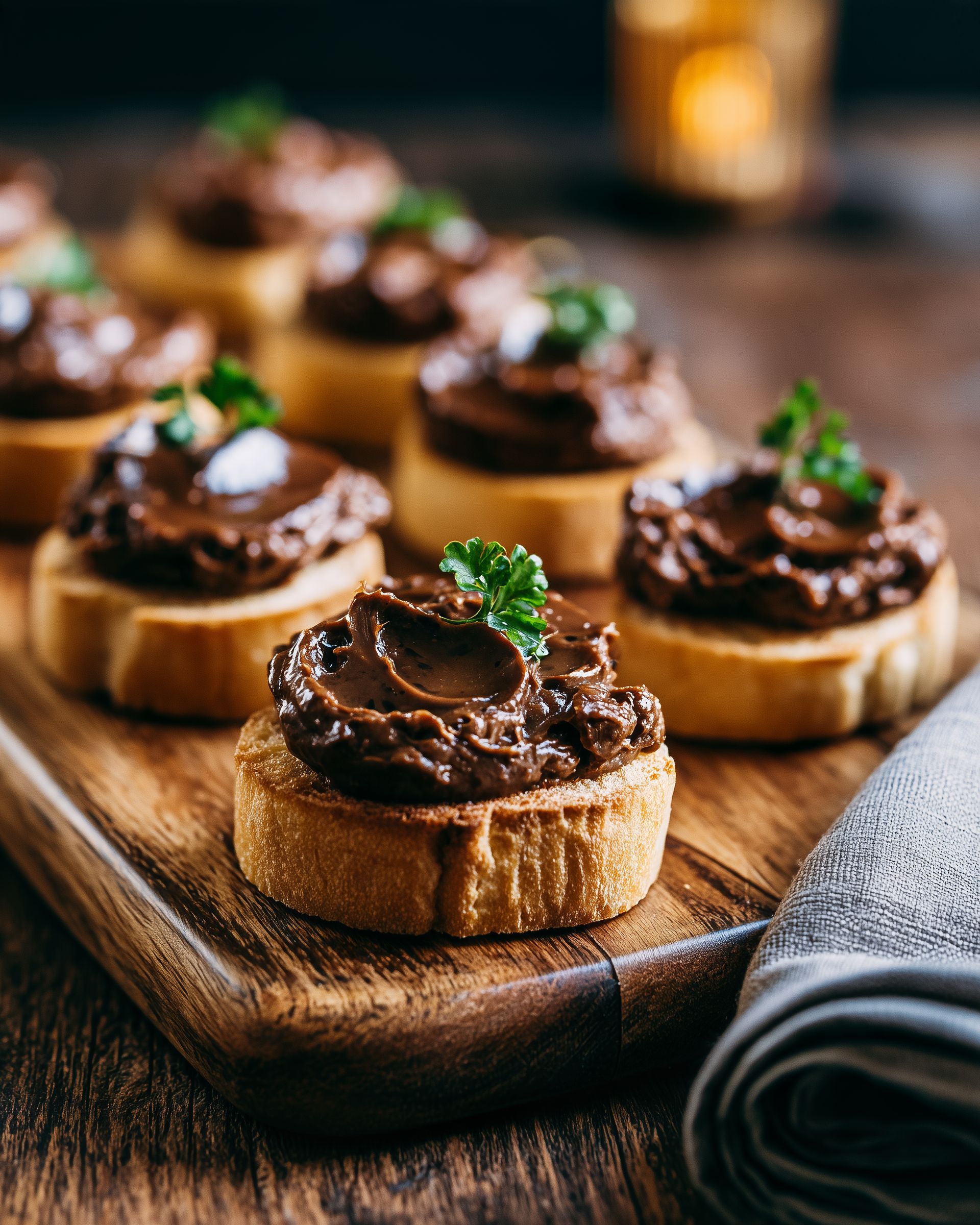
We call these crostini neri in the kitchen, for obvious reasons the moment you see them, and my father refuses to describe what's in them to anyone eating them for the first time until after they've already decided they like it. Chicken liver alone is not a hard sell. Chicken liver, once someone learns that's what it is, apparently becomes one, and he has strong opinions about the order these things should happen in.
Ingredients
- 300g chicken livers, trimmed of fat and connective tissue
- 1 small onion, finely chopped
- 2 anchovy fillets
- 1 tablespoon capers, rinsed
- 2 sage leaves
- 60ml Vin Santo (or dry Marsala)
- 2 tablespoons olive oil, plus more for the bread
- Fine sea salt and black pepper
- 1 baguette or country loaf, sliced and toasted
Makes enough for about 12 crostini.
Cookware Required
- una padella (a frying pan)
- un coltello a mezzaluna o un frullatore (a mezzaluna knife, or a food processor, for chopping the liver)
Method
Warm the olive oil in a pan over medium-low heat, and cook the onion and sage gently until the onion turns soft and translucent, without taking on any real color -- ten minutes or so, no rush.
Add the chicken livers, and cook until browned on the outside but still faintly pink within, about five minutes. Add the anchovies and capers, and stir until the anchovies have all but dissolved into the pan.
Pour in the Vin Santo, and let it bubble and reduce by about half, scraping up anything stuck to the bottom of the pan as you go. Once the liquid has mostly cooked away, remove from the heat, and let it cool for a few minutes.
Chop the mixture by hand with a mezzaluna, or pulse it briefly in a food processor -- either way, you're after a rough, spreadable paste, not a perfectly smooth one. A crostini di fegatini that's too smooth loses the texture that makes it interesting. Taste, and adjust the salt carefully; the anchovies and capers have already done some of that work for you.
Brush the toasted bread lightly with olive oil, and spread the warm liver paste generously over each piece. Serve while the paste still has some warmth left in it.
Quando Va Storto
If the paste tastes bitter, the livers were overcooked, or a bit of green gall bladder made its way into the pan without being trimmed away -- check your livers carefully before they go in, since a single missed piece can ruin the whole batch. If it tastes flat and one-note, it likely needed more of the Vin Santo's sweetness, or you rushed the reduction and boiled off the flavor along with the alcohol; let it reduce slowly rather than at a hard boil. And if nobody at the table will admit to liking it until you tell them what it is, that is, apparently, not a flaw in the recipe. That's simply how this dish goes over in this family.
Una Storia dalla Sala
An older man went completely silent halfway through his first crostino, staring down at the plate as though it had said something to him. It tasted exactly like his grandmother's, he finally told Francesca, once his voice was steady enough to use -- she had been gone thirty years, and he had never once found anyone who came close since. My mother, once Francesca relayed this back to the kitchen, quietly comped his entire meal and asked that nobody mention it to him directly.
He found out anyway, the way people always do in a place this size, and came back the following week for the sole purpose of thanking her properly, in person, before he'd even sat down.