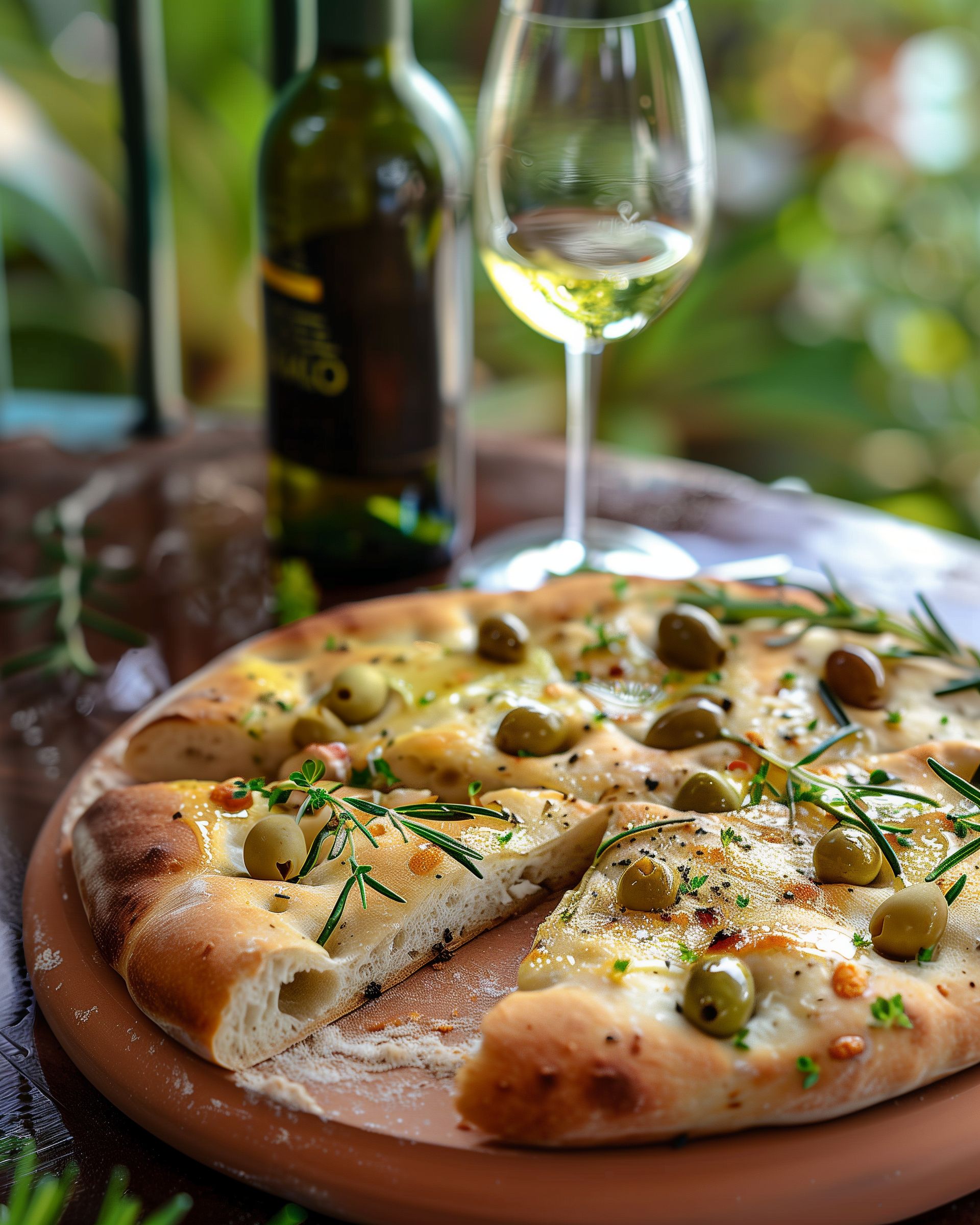
Focaccia alle Olive Verdi e Erbe
This is my mother's same dough -- the one on the page before this, thin and true to Liguria -- with green olives pressed into it and enough rosemary that the whole kitchen smells like the hillside behind Montesorra before it's even out of the oven. My sister Chiara makes this one more than any other, mostly because it disappears before dinner service even starts, eaten straight off the cooling rack by whoever walks past first.
Ingredients
- 500g Tipo “00” flour
- 300ml warm water
- 50ml extra virgin olive oil, plus more for the pan and for finishing
- 10g fine sea salt
- 2g instant dry yeast
- 1 teaspoon honey
- 150g pitted green olives (Castelvetrano or another mild green olive)
- 2 tablespoons fresh rosemary, roughly chopped
- For the salamoia: 100ml water, 50ml extra virgin olive oil, and coarse sea salt
Makes one large tray, same as the Genovese -- see that recipe's chart for other pan sizes.
Cookware Required
- la bilancia da cucina (kitchen scale)
- la teglia (a rimmed baking pan, well oiled)
- il pennello da cucina (pastry brush, for oiling the pan)
- una ciotolina (a small bowl, for mixing the salamoia)
Method
Make the dough exactly as you would for focaccia Genovese -- same flour, same water, same rise, same first press into the pan. The two doughs are identical up to this point, and there's no reason to make life harder by pretending otherwise.
Once you've dimpled the surface, press the olives into a good number of the dimples -- not all of them, or every bite will taste the same, and half the pleasure of this bread is not knowing which piece you're about to get. Scatter the chopped rosemary over everything, then pour the salamoia the same way you would for the plain version, letting it pool in whatever dimples are left.
Let it sit uncovered for the same twenty minutes, and bake at the same 230°C (450°F) for fifteen to twenty minutes, until deeply golden. The olives will darken slightly and the rosemary will crisp at the edges -- both are supposed to happen, and neither is a sign anything went wrong.
Quando Va Storto
If the olives sink to the bottom during baking instead of staying where you pressed them, your dough hadn't proofed quite enough before you added them -- a fully risen dough holds its indentations, an under-proofed one doesn't. If the rosemary tastes bitter rather than fragrant, it sat too close to the direct heat for too long; scatter it a little more sparingly next time, or add half of it after baking instead of before. Everything else that can go wrong here is exactly what can go wrong with the plain Genovese, and the fix is the same.