Focaccia Genovese
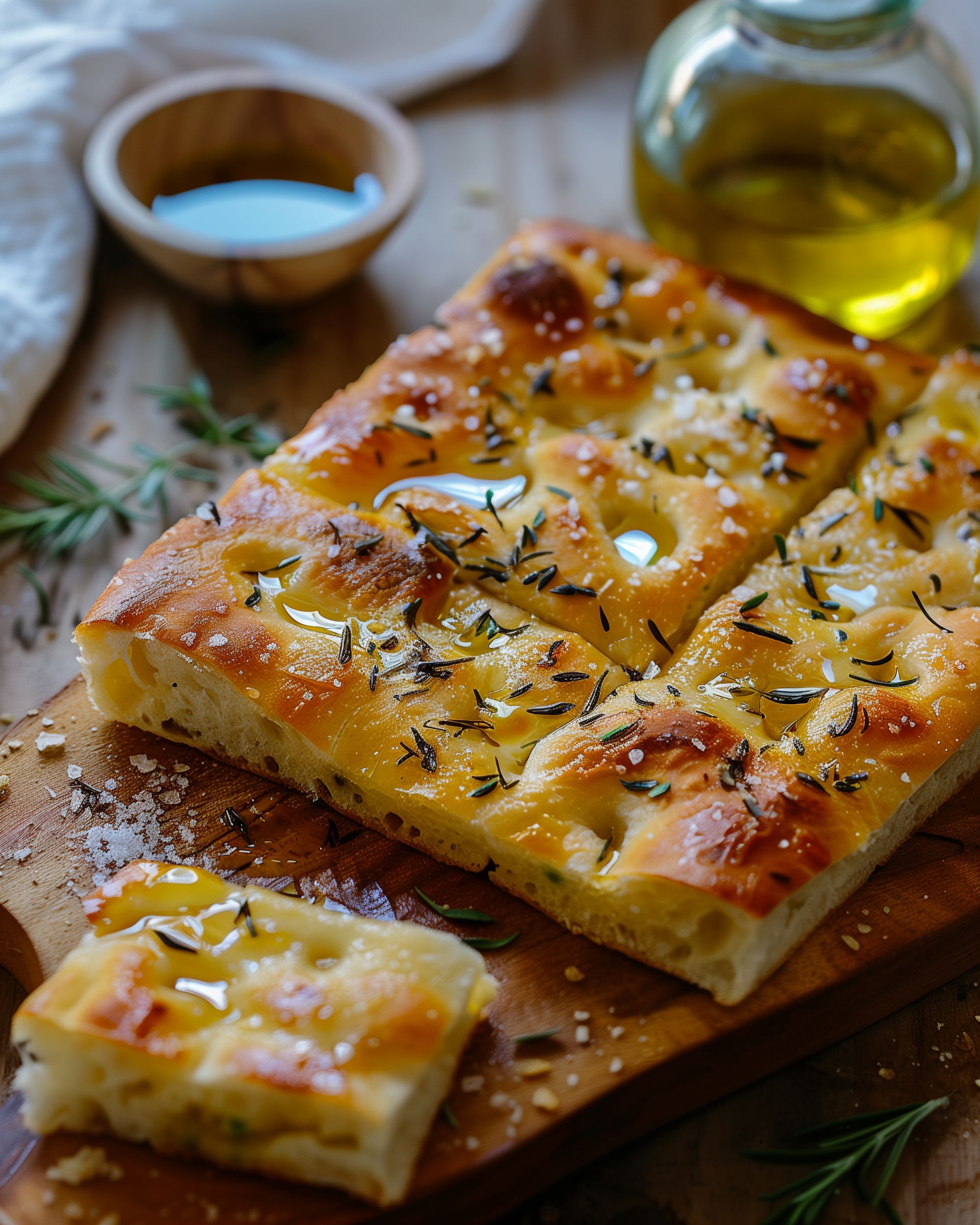
My mother came to Montesorra from a town on the Ligurian coast, and she brought this with her before she brought almost anything else. Most people outside Liguria have never actually eaten focaccia Genovese -- they have eaten a thick, doughy cousin of it sold under the same name, and they are missing the point entirely. Ours is thin: a finger's width, no more. If you have made one and it rose taller than that, you have made a different, perfectly good bread. Just not this one.
Ingredients
- 500g Tipo “00” flour
- 300ml warm water
- 50ml extra virgin olive oil, plus more for the pan and for finishing
- 10g fine sea salt
- 2g instant dry yeast
- 1 teaspoon honey
- For the salamoia: 100ml water, 50ml extra virgin olive oil, and coarse sea salt
Makes one large tray (about 15-inch round, or any pan totaling roughly 165–170 square inches) -- see the sizing chart at the end of this recipe for other pans.
Cookware Required
- la bilancia da cucina (kitchen scale)
- la teglia (a rimmed baking pan, well oiled)
- il pennello da cucina (pastry brush, for oiling the pan)
- una ciotolina (a small bowl, for mixing the salamoia)
Method
Dissolve the yeast and honey in the warm water. In a large bowl, combine the flour and salt, then pour in the water and, finally, the olive oil. Mix until a rough dough forms, then knead by hand for about eight minutes, until it turns smooth and elastic. Cover, and let it rise at room temperature for about an hour, until nearly doubled.
Oil your pan generously -- more than feels reasonable -- and turn the dough out onto it. Press it toward the corners and edges with oiled fingertips, working it thin, and take care to press the dough right up against the edges of the pan. This last detail matters more than it sounds: any gap along the edge is where the salamoia will find its way underneath later and leave you with a soggy bottom instead of a crisp one.
Cover, and let it rest again for about forty-five minutes. Meanwhile, stir together the water, olive oil, and a generous pinch of coarse salt for the salamoia.
Uncover the dough, and press your fingertips firmly all the way down into it, close together, all across the surface -- these are the dimples the bread is known for. Pour the salamoia evenly over the top, letting it pool in every dimple, and sprinkle with more coarse salt. Let it sit, uncovered, for twenty minutes more while your oven heats to 230°C (450°F).
Bake for fifteen to twenty minutes, until deeply golden, not merely pale gold -- this bread rewards a confident oven. The moment it comes out, brush the top with a little more olive oil, and lift it from the pan onto a rack so the underside stays crisp rather than steaming itself soft.
Choosing the Right Pan
My mother has never once measured this recipe against a ruler, and would be offended if you suggested she needed to. But not everyone owns her eye, and not everyone owns her pan, so here is the same dough, scaled honestly to whatever you actually have in your kitchen.
| Pan | Flour | Water | Olive Oil | Salt | Yeast | Bake Time |
|---|---|---|---|---|---|---|
| 9-inch round (64 sq in) | 190g | 115ml | 20ml | 4g | ¾ g | 14–16 min |
| 12-inch round (113 sq in) | 340g | 205ml | 35ml | 7g | 1½ g | 16–18 min |
| 9 × 13 in, quarter sheet (117 sq in) | 350g | 210ml | 35ml | 7g | 1½ g | 16–18 min |
| 14-inch round (154 sq in) | 460g | 275ml | 45ml | 9g | 2g | 18–20 min |
| 15-inch round, or ~166 sq in (this recipe, as written) | 500g | 300ml | 50ml | 10g | 2g | 15–20 min |
| 13 × 18 in, half sheet (234 sq in) | 700g | 420ml | 70ml | 14g | 3g | 20–23 min |
Honey scales the same way as everything here -- about 1.5% of the flour's weight, a scant teaspoon for the 500g batch, and roughly proportional, by eye, for every other size above.
Quando Va Storto
If the bottom is soggy rather than crisp, the salamoia found a gap at the edge of the pan and ran underneath; next time, press the dough more firmly against the corners before the first rest. If the bread came out thick and cottony instead of thin, your pan was too small for the amount of dough -- see the chart below, which is exactly the fix for this. If it is pale rather than deeply golden, your oven was not hot enough, or you moved the bread to a lower rack too late; trust the full heat, and trust your eyes over the clock. And if it tastes dry instead of moist and rich, you were not generous enough with the salamoia -- there is no such thing as too much, only too little, poured into too few dimples.
Una Storia dalla Sala
Signora Bruni has walked through our door most mornings for longer than I can remember, and she has never once had to ask for anything. A corner piece, the one with the most salt, is already wrapped in paper and waiting for her before she's fully through the door -- whoever's nearest simply does it, without being told, the way you'd hold a door for someone whose hands are full. She tried to insist on paying extra for the trouble, in the early years. My mother told her, more than once, that watching for what a person needs before they ask isn't trouble, it's simply the job, and eventually Signora Bruni stopped arguing the point.
She told my mother once, years later, that being known somewhere without having to explain yourself is worth more than almost anything else a place can offer a person. My mother has never forgotten it, and repeats it to us more often than any of us probably deserve.