Gnocchi al Pomodoro
My mother judges a gnocchi within one bite, and has never once kept the verdict to herself. Too heavy, she'll say, not unkindly, which in her language means you added flour out of fear rather than confidence, and confidence is the entire skill this dish actually requires.
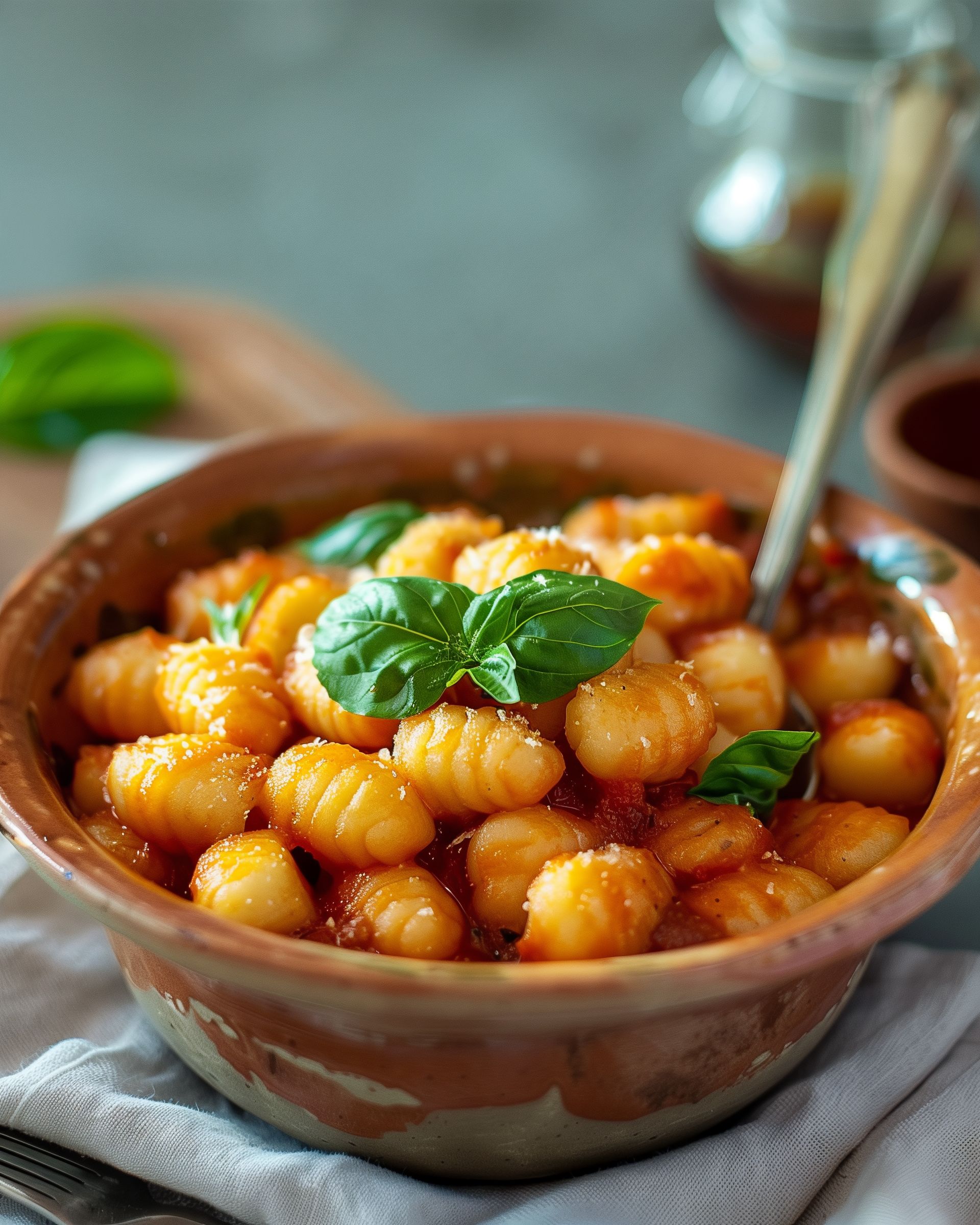
Ingredients
- 1kg starchy potatoes (such as russet)
- 200–250g “00” flour, plus more for shaping
- 1 egg
- Fine sea salt
- 500g crushed tomatoes
- 2 cloves garlic
- Fresh basil
- Extra virgin olive oil
- Grated Parmigiano, to serve
Serves 4–6.
Cookware Required
- uno schiacciapatate (a potato ricer (a food mill works too))
- una forchetta (a fork, for shaping the ridges)
- la pentola grande (large pot, for boiling)
Method
Bake the potatoes whole, in their skins, at 200°C (400°F) until completely tender, about an hour, depending on size -- baking rather than boiling keeps them from taking on water, which is the single biggest cause of heavy gnocchi. While they're still hot enough to handle only barely, peel them and pass the flesh through a ricer onto a clean work surface.
Spread the riced potato out, and let it sit for a few minutes to release some steam and cool slightly. Season with salt, work in the egg, and then add the flour gradually, folding it in rather than kneading hard, stopping as soon as the dough comes together and no longer sticks heavily to your hands. Use the least flour you can get away with. Every extra spoonful makes the final gnocchi denser.
Divide the dough into pieces, and roll each into a rope about as thick as a finger. Cut into short pillows, and, if you like, roll each one gently over the back of a fork to leave ridges -- these are not decoration, they help the sauce cling later.
Bring a large pot of well-salted water to a boil. Meanwhile, warm a little olive oil, cook the garlic until pale gold, add the crushed tomatoes and a pinch of salt, and simmer for fifteen to twenty minutes.
Cook the gnocchi in batches, and lift them out with a slotted spoon the moment they float to the surface, plus a few seconds more -- they cook quickly, and overcooking them undoes all the careful work of keeping the dough light. Toss gently with the tomato sauce, so as not to break them apart, and finish with basil and Parmigiano.
Quando Va Storto
If the gnocchi come out heavy and dense, too much flour was worked in, usually out of nervousness about the dough seeming too soft; the dough should feel just barely manageable, not firm. If they fell apart while boiling, they needed a little more flour or egg to hold together after all, or the dough was underworked rather than overworked. And if they turned gluey rather than light, the potatoes were riced after cooling too much, or were boiled instead of baked and had absorbed water they never fully released -- work with the potato as hot as you can stand, and bake it rather than boil it, every time.
Una Storia dalla Sala
A six-year-old at a nearby table announced, in the particular carrying voice unique to six-year-olds, that her gnocchi were "a little bit too squishy, actually," loudly enough for at least four other tables to hear it clearly. Her parents went the color of the tomato sauce with embarrassment. My mother, rather than brushing it off, crouched down to the girl's eye level and asked her, with total seriousness, to explain exactly what she meant by squishy.
She went back afterward and interrogated that night's batch with the same seriousness, and found, in fact, that the dough had been slightly overworked. She still refers to that child, fondly and often, as the toughest inspector this kitchen has ever had, and periodically wonders aloud whether she should be hired.