Impasto per Pizza a Lievitazione Lenta -- Slow-Ferment Pizza Dough
In this kitchen, the dough belongs to my brother Matteo, and has for as long as anyone can remember. We keep an entire walk-in refrigerator for nothing else -- trays of dough stacked three days deep, since a restaurant that sells pizza every night cannot wait for a single batch to finish. Today's dough sits beside tomorrow's, which sits beside the dough that will not be ready until the day after, and Matteo can tell which tray is which without reading a single label.
My mother's rule, chi ha tempo non aspetti tempo -- whoever has time should not wait for more of it -- does not apply to this dough, and she is the first to admit it. Some things, she says, and she says it the way other people confess to something, must simply wait. This is one of them.
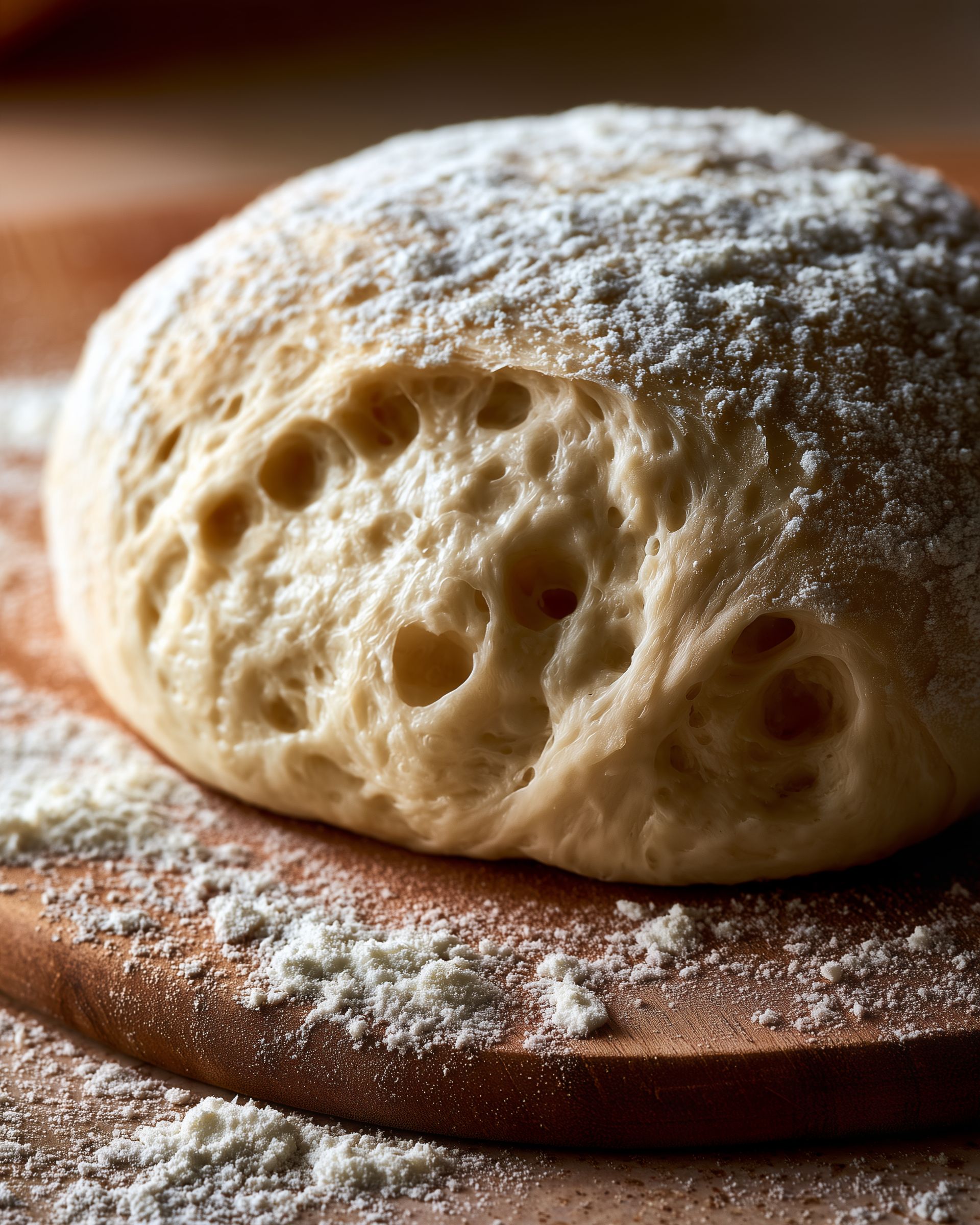
Ingredients
- 500g Tipo “00” flour (bread flour works too)
- 325ml cool water
- 12g fine sea salt
- 1g instant dry yeast (about ¼ teaspoon -- yes, truly that little)
- A little extra flour or semolina, for shaping
Makes 3 dough balls, enough for three 12-inch pizzas -- the restaurant simply multiplies the same ratios.
Cookware Required
- la bilancia da cucina (kitchen scale -- do not attempt this with cups)
- la ciotola grande (large mixing bowl)
- il tarocco (dough scraper)
- il contenitore con coperchio (a lidded container, one for each dough ball -- see the note below on why it shouldn't be truly airtight)
Method
Weigh the flour and salt into the large bowl and whisk them together. In a separate container, stir the yeast into the water until it disappears -- it needs no time to “wake up” first, whatever your grandmother may have told you. Pour the water into the flour, and mix with your hand or the scraper until no dry flour remains and a shaggy, sticky mass has formed. This is not kneading. There is no kneading in this recipe, and if your arm is tired afterward, you have done something unnecessary.
Cover the bowl, and leave it at room temperature for around an hour. Then, with wet hands, reach under the dough, stretch one side up and fold it over the top, turn the bowl a quarter turn, and repeat three or four times. This takes thirty seconds and replaces all the kneading you did not do. Cover again.
Let the dough rise at room temperature until it has roughly doubled and shows small bubbles under the surface -- in most kitchens, this takes several hours, longer if your kitchen runs cold.
Turn it out onto a lightly floured surface, and shape the whole mass into a ball first -- working around the edge, lift and fold each side up and in toward the center, turning the dough as you go, a few times around, until it gathers into something round and cohesive.
Divide it into three equal pieces. Shape each one properly: lift the edges up and in toward the center, working around the piece a few times until the surface turns smooth and slightly taut, then pinch the gathered points closed at the bottom. Set each ball pinched-side down into its own lidded container, so the smooth side faces up.
Cover the containers well, but don't reach for anything truly airtight -- a proper hermetic seal traps the carbon dioxide the yeast is producing with nowhere at all to go, and that pressure eventually finds its own way out, whether you've planned for it or not. Matteo learned this the hard way early on, sealing three containers tightly enough that one lid launched itself clean off the counter with a bang loud enough to bring our mother running from the dining room, convinced something had actually broken. These days we simply poke a small hole in the center of each lid with a pin before using it -- enough for the gas to escape, not enough to let the surface of the dough dry out -- and nothing in this kitchen has exploded since.
Refrigerate for at least twenty-four hours, and up to seventy-two. This is the part that cannot be rushed, and it is also the part that does all the actual work: the cold does not stop the fermentation, it only slows it down enough that flavor accumulates faster than gas does. A dough that has waited three days tastes like a different, better food than a dough that waited one.
On the day you intend to bake, remove the dough from the refrigerator two to four hours ahead of time, and let it sit at room temperature, still covered. Cold dough tears. Dough that has had time to relax stretches like it wants to.
Quando Va Storto
If the dough is too sticky to handle, your flour, your measuring, or your kitchen's humidity has thrown off the hydration; dust your hands and the surface generously with flour or semolina rather than adding more flour to the dough itself, which will change everything else about it. If it never rose and shows no bubbles anywhere, the yeast is very likely dead -- water that was too hot when you mixed it is the most common cause -- and there is no fixing that batch; begin again, and use water that feels barely warm, not hot, against your wrist. If it tears the moment you try to stretch it, it has not rested long enough at room temperature; return it to the bowl, cover it, and wait another thirty minutes before trying again. And if the baked crust is dense and tight instead of airy, the dough was asked to bake before its time in the refrigerator was truly finished; next time, go the full seventy-two hours before you decide it is ready.