Impasto per Pizza a Lievitazione Rapida -- Fast-Ferment Pizza Dough
Matteo does not love this recipe, and makes sure everyone knows it. This is the dough for the nights nobody planned ahead -- a customer calls at four for a party of twelve at seven, or one of us forgot, again, to pull a ball out of the walk-in three days in advance. It will never taste quite like the version that waited. It will still taste like pizza, and some nights that is exactly enough.
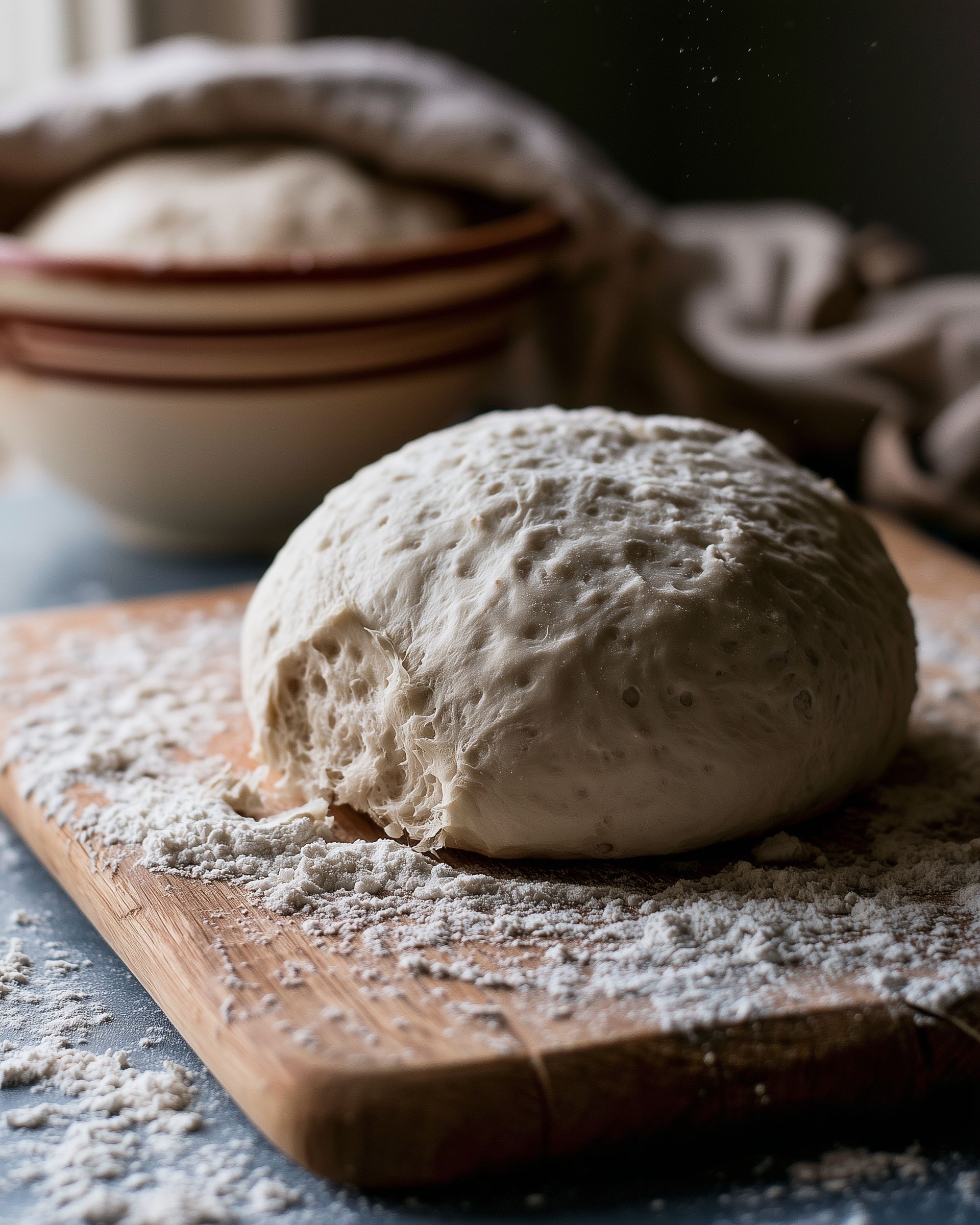
Ingredients
- 500g Tipo “00” flour
- 325ml warm water (about body temperature, not hot)
- 12g fine sea salt
- 7g instant dry yeast (about 2¼ teaspoons -- more than seven times the slow version, and this is the whole trick)
- A pinch of sugar or honey, to help it along
- Extra flour or semolina, for shaping
Makes 3 dough balls, enough for three 12-inch pizzas, ready the same day.
Cookware Required
- la bilancia da cucina (kitchen scale)
- la ciotola grande (large mixing bowl)
- il tarocco (dough scraper)
Method
Dissolve the yeast and the pinch of sugar in the warm water, and let it sit for five minutes, until the surface turns foamy -- this tells you the yeast is alive and impatient, which is exactly what you want today.
Combine the flour and salt in a large bowl, pour in the yeasted water, and mix until a rough dough forms. Knead by hand for about eight to ten minutes, until it turns smooth and elastic -- this dough, unlike its slower cousin, benefits from real kneading, since there is no three-day rest to develop the gluten for you.
Shape it into a ball, place it in an oiled bowl, cover, and set it somewhere warm -- on top of the refrigerator, near a warm oven, anywhere that isn't cold. Let it rise until roughly doubled, about an hour and a half to two hours. This is the one step in this recipe you cannot rush any further than that; there has to be some patience somewhere.
This dough will be noticeably wetter and stickier than its slow-fermented cousin, and it cannot simply be cut into pieces and stretched the way that other recipe describes -- try that here, and you'll end up with dough stuck to every surface in your kitchen and nowhere close to a pizza.
Scoop the whole mass out onto a lightly floured surface instead. Working around the edge, gently lift and fold each side in toward the center, turning the dough as you go, three or four times around -- this is not kneading, only enough handling to give the gluten something to hold onto. Dust the surface again, cover the dough, and let it rest for fifteen minutes right where it sits.
Cut it into three roughly equal pieces. Shape each one the same way you just shaped the whole batch -- gently pulling the edges up and in toward the center, working around the piece a few times, until the surface turns smooth and slightly taut. Pinch the gathered points together at the bottom, and set each ball down pinched-side down, so the smooth side faces up. Cover, and let them rest fifteen minutes more before you attempt to stretch any of them.
Use it the same day -- this dough does not keep, and does not want to.
Quando Va Storto
If the dough seems impossible to handle, sticking to your hands and the counter no matter what you do, it likely went straight from the bowl to stretching without its two short rests; a wet dough like this one needs that structure-building time, and skipping it almost never ends well. If the dough feels tight and springs back hard every time you try to stretch it, it hasn't rested long enough after shaping; give it another fifteen minutes and try again. If it tastes noticeably of yeast, rather than simply bread, you let it rise too long, or in too warm a spot; next time, watch it rather than the clock, and pull it as soon as it has doubled, not further. And if the baked crust comes out dense instead of light, the kneading was likely rushed -- this dough has no long ferment to hide behind, so the gluten has to be built the honest way, by hand, before it ever sees the oven.