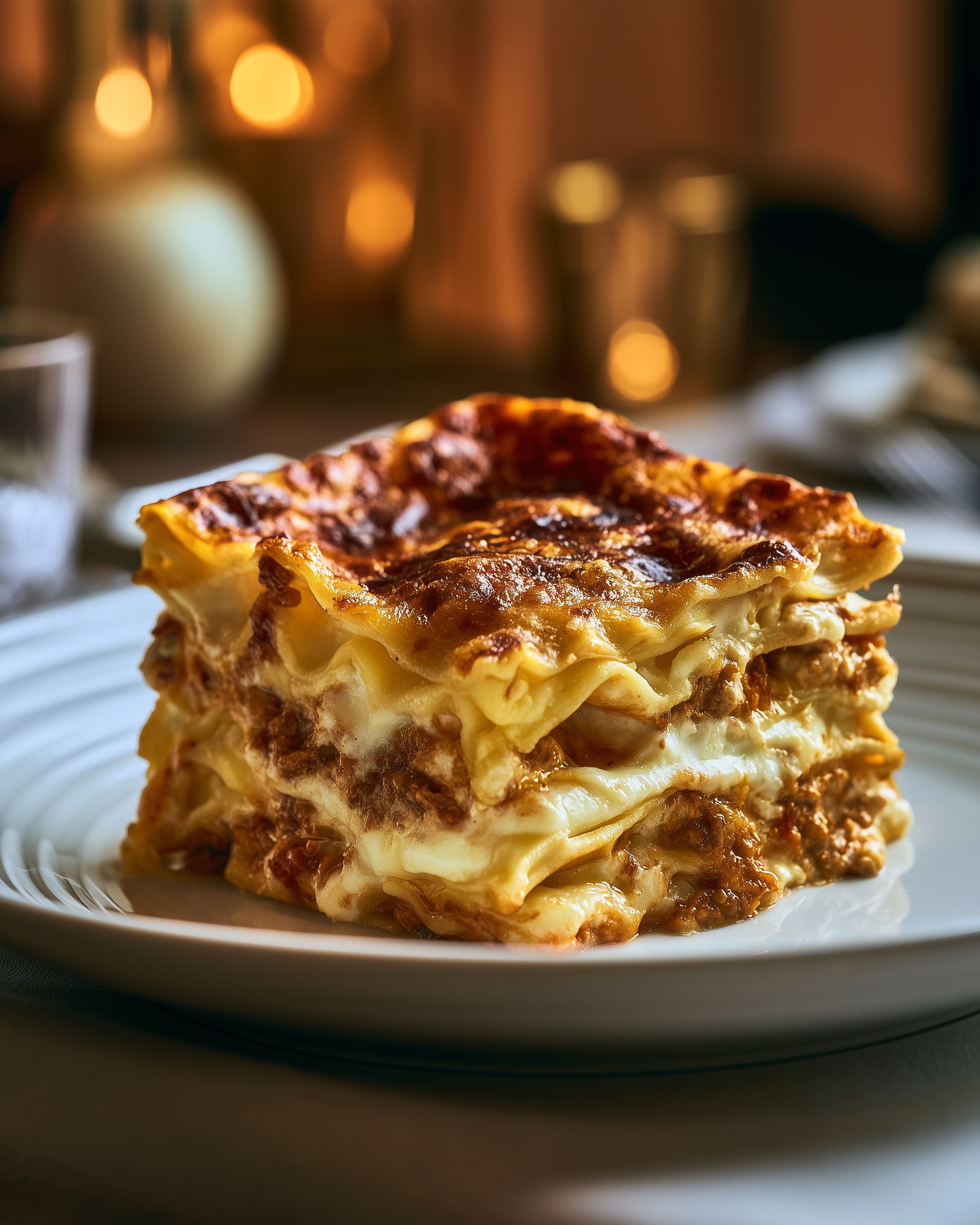
Lasagna alla Bolognese
This is where the extra ragù goes when there's more of it than even our Sunday table can finish -- though “extra” undersells how much of it a proper lasagna actually wants. Nobody in this family has ever made this dish with a ragù that wasn't already several hours old, and I don't recommend trying otherwise.
Ingredients
- About 1kg Ragù della Domenica (see earlier in this chapter)
- 500g fresh lasagna sheets (or dried, cooked according to package)
- 60g butter
- 60g flour
- 1 liter whole milk, warmed
- A little grated nutmeg
- 150g Parmigiano Reggiano, finely grated
- Fine sea salt
Serves 8.
Cookware Required
- una teglia da forno (a baking dish)
- una casseruola (a saucepan, for the besciamella)
- una frusta (a whisk)
Method
Make the besciamella first. Melt the butter in a saucepan over medium heat, then whisk in the flour all at once, and cook for a minute or two, stirring constantly, until it smells faintly toasted rather than raw. Pour in the warm milk gradually, whisking the whole time to keep it smooth, and continue cooking until it thickens enough to coat the back of a spoon. Season with salt and a little nutmeg, and set aside.
If using dried lasagna sheets that need boiling, cook them until just pliable, not fully tender -- they will finish softening in the oven. Fresh sheets need no precooking at all.
Spread a thin layer of ragù across the bottom of your baking dish -- just enough to keep the first layer of pasta from sticking. Add a layer of pasta sheets, then a layer of ragù, a thin layer of besciamella, and a scatter of Parmigiano. Repeat this sequence until you run out of pasta, finishing with a generous final layer of besciamella and a heavier scatter of Parmigiano on top.
Bake at 190°C (375°F), covered with foil, for twenty-five minutes, then uncover and bake for another fifteen to twenty minutes, until the top is deeply golden and bubbling at the edges. Let it rest for at least ten minutes before cutting -- this is not optional. A lasagna cut straight from the oven collapses into its own layers instead of holding them.
Quando Va Storto
If the finished lasagna is watery when you cut into it, the besciamella was too thin, or the ragù itself was too wet to begin with -- a proper Sunday ragù, cooked its full three hours, should already be thick enough to hold its shape on a spoon. If the layers slide apart the moment you serve it, it wasn't rested long enough before cutting; ten minutes is a minimum. And if the top burns before the inside is properly hot, your oven runs hotter than you think, or the foil came off too early; cover it for longer next time, and trust the uncovered stage to do less of the work.
Una Storia dalla Sala
A woman insisted, with real conviction, on a severe dairy allergy, and sent her lasagna back twice before Valentina had rebuilt it from scratch as an entirely dairy-free version -- no small undertaking for a dish built partly on besciamella. Twenty minutes after finishing every bite of it, the same woman was spotted at the next table happily working through her friend's tiramisù, mascarpone included, without any apparent concern.
Nobody said a word to her about it. "Gone Bolognese" has since become house shorthand, muttered under someone's breath, for precisely this kind of guest.