Pane Casereccio
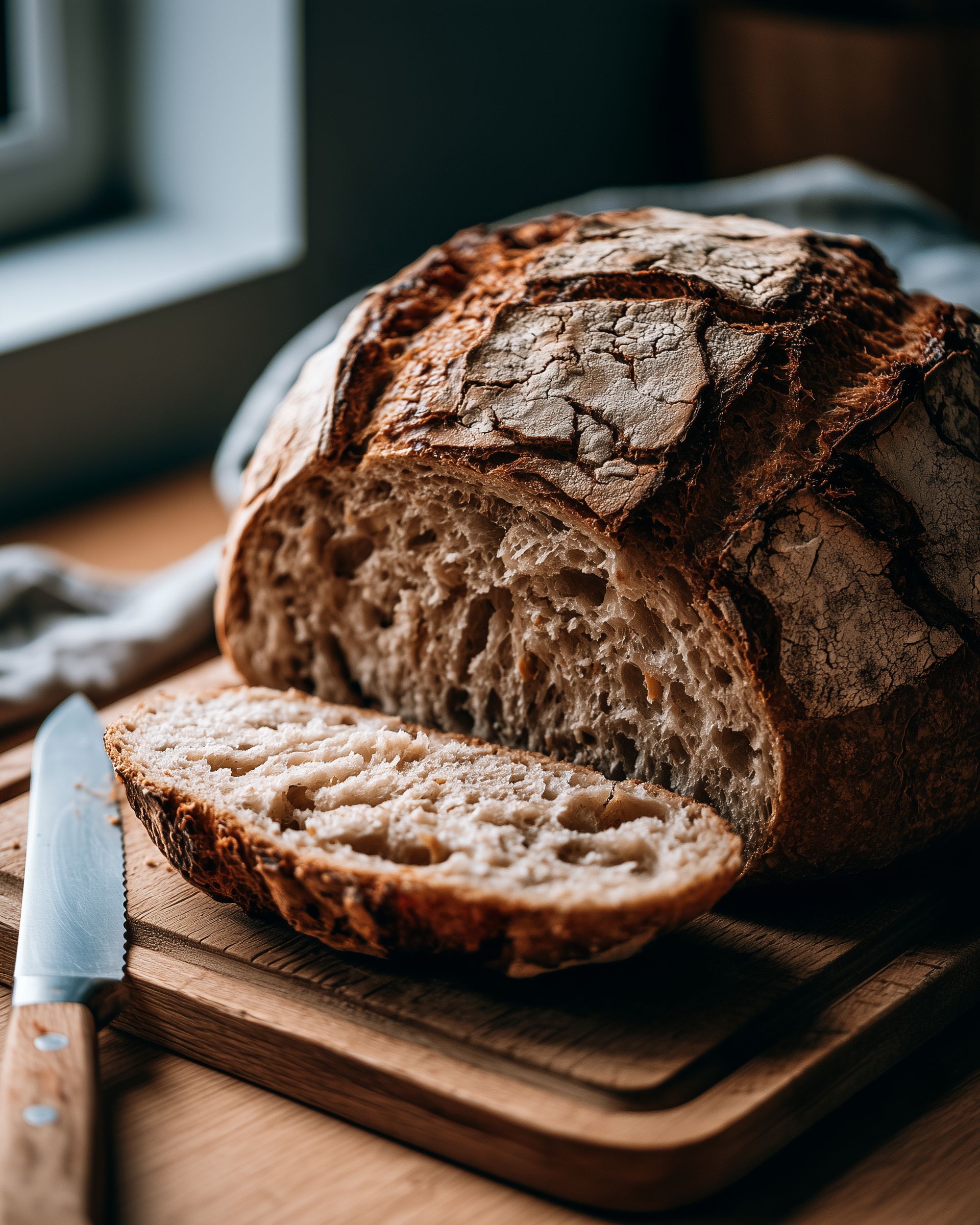
This is not a special-occasion bread. It is the one that's simply always there -- next to the olive oil at the start of dinner, under whatever's left of the ragù at the end of the week, torn apart by hand more often than it's ever properly sliced. It asks for almost nothing and gives back a great deal, which is the whole philosophy of this kitchen if you boil it down far enough.
Ingredients
For the biga (made the night before):
- 150g Tipo “00” or bread flour
- 150ml cool water
- A pinch (about ⅛ teaspoon) of instant dry yeast
For the final dough:
- All of the biga
- 350g Tipo “00” or bread flour
- 200ml water
- 10g fine sea salt
- 3g instant dry yeast
Makes one medium loaf.
Cookware Required
- la bilancia da cucina (kitchen scale)
- due ciotole (two bowls, one for the biga, one for the final dough)
- un cesto da lievitazione (a proofing basket, or a bowl lined with a floured cloth)
- una lametta (a blade or sharp knife, for scoring)
- la pietra refrattaria (a baking stone or heavy sheet pan)
Method
The night before, stir together the biga's flour, water, and yeast until just combined -- it will look more like a thick batter than a dough, and that's correct. Cover loosely, and leave it on the counter overnight, eight to twelve hours. It will bubble, rise, and smell faintly sour by morning, which is exactly what you're waiting for.
The next day, combine the biga with the remaining flour, water, salt, and yeast, and mix until a shaggy dough forms. Knead for about ten minutes, until smooth and elastic -- this dough is wetter than most, and will feel like it's fighting you at first. Keep going. It comes together.
Cover, and let it rise at room temperature for two to three hours, until roughly doubled. Turn it out gently, shape it into a round or oval loaf without deflating it more than you have to, and set it into a floured proofing basket, or a bowl lined with a well-floured cloth, seam side up.
Let it proof for forty-five minutes to an hour, until it's noticeably puffier but not yet fragile. Meanwhile, heat your oven as hot as it will go, with a baking stone or a heavy sheet pan inside, and a second empty pan on the bottom rack for steam.
Turn the loaf out onto the hot stone, score the top firmly with a blade -- one confident line, not a timid scratch -- and pour a cup of hot water into the empty pan below before you shut the oven door. The steam is what gives this bread its crackling crust; without it, you get bread that's merely good instead of bread that's right.
Bake for about fifteen minutes with the steam, then remove the water pan and continue baking for another twenty to twenty-five minutes, until the crust is deeply browned and the loaf sounds hollow when you knock on its base. Let it cool completely before cutting -- this is not a suggestion. Bread cut too early loses half its texture to the steam still trying to escape.
Quando Va Storto
If the crumb comes out dense and gummy instead of open, it was very likely cut before it had properly cooled, or it didn't get quite enough time in the oven; a loaf this size needs to sound genuinely hollow, not just done. If the crust stays pale instead of deeply browned, your oven wasn't as hot as it needed to be, or the steam step was skipped; both matter more than people expect. If the loaf spreads outward instead of rising upward, the dough was under-proofed going into the oven, or the shaping was too loose -- next time, shape it a little tighter, with more tension across the top. And if the score doesn't open into that clean, blistered line, the blade was dull, or the cut was too shallow and too hesitant; go deeper, and go fast.
Una Storia dalla Sala
An elderly man dining alone insisted on paying his bill in lire -- the old currency, retired decades before most of our regular customers were even born. My father took the notes without comment, disappeared into the back for a moment, then returned and told him, gently, that of course it was fine, though perhaps next time euros would save him the trouble of carrying two currencies. The man smiled and said there wouldn't be a next time he'd need lire for -- he'd simply wanted, once more, to pay for a meal exactly the way he used to pay for them with his wife, years ago, before she died. He paid again properly, in euros, without being asked, and left the old notes behind "for the register," as he put it.
They sit now in a small frame near the till, and none of us has ever quite settled whether that was sentimental of him, or sentimental of us for keeping them.