Pasta al Pesto Genovese
You already know, if you've read the tips at the back of this book, how we feel about a mortar and pestle here. This is the dish that opinion exists for. Trofie, the potato and green beans, and pesto pounded by hand rather than run through a blade -- this is not a recipe I'm willing to compromise on, even for a book meant to make things easier.
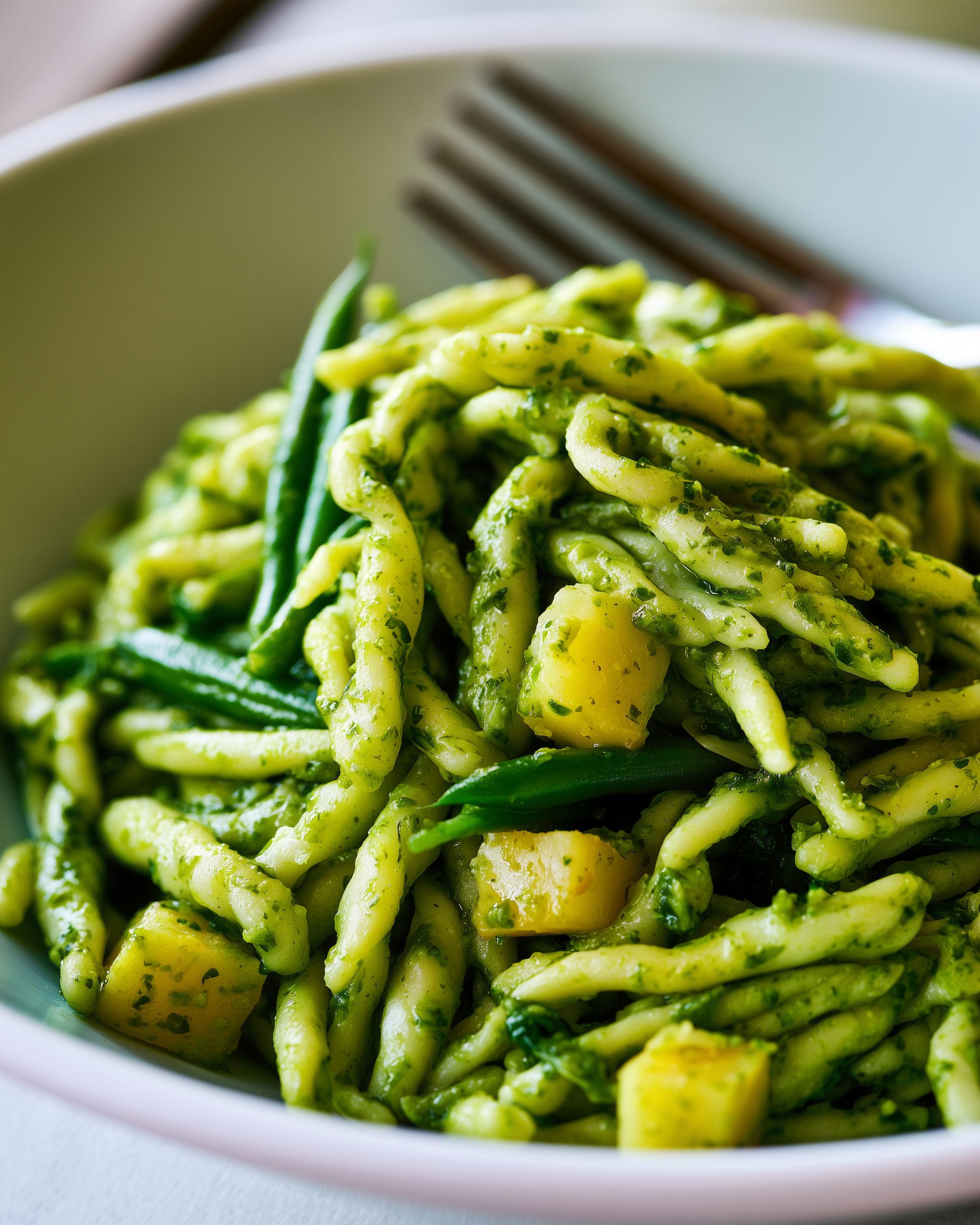
Ingredients
- 400g trofie or trenette
- 200g green beans, trimmed and halved
- 2 medium potatoes, peeled and diced
- 60g fresh basil leaves
- 30g pine nuts
- 2 cloves garlic
- 50g Parmigiano Reggiano, grated
- 30g Pecorino, grated
- 100ml extra virgin olive oil
- Fine sea salt
Serves 4.
Cookware Required
- il mortaio e il pestello (mortar and pestle)
- la pentola grande (large pot, for the pasta water)
Method
Start the pesto. Crush the garlic with a pinch of salt in the mortar until it breaks down to a paste, then add the pine nuts and crush those in turn. Add the basil a handful at a time, grinding in a circular motion rather than pounding straight down, until it breaks into a bright green paste. Work in the two cheeses, then drizzle in the olive oil gradually, stirring rather than crushing, until you have a thick, glossy sauce. Taste, and adjust the salt.
Bring a large pot of well-salted water to a boil. Add the potatoes first, since they take the longest, and cook for about five minutes, then add the green beans and the pasta together, and cook until the pasta is just short of al dente.
Scoop out a cup of pasta water, then drain the pasta, potatoes, and beans together. Let them cool for a moment off the heat -- the pesto should never meet pasta that's still aggressively hot, since real heat dulls both its color and its flavor. Toss everything with the pesto, loosening with a little of the reserved water until it coats evenly.
Quando Va Storto
If the pesto turns dull and dark instead of staying bright green, it was likely made too fast with a blade, whose friction generates enough heat to bruise the basil, or it was tossed with pasta straight off the boil instead of pasta that had cooled for a minute. If the sauce looks split and oily rather than emulsified, the olive oil was added all at once rather than gradually. And if it tastes flat, season the pesto itself at every stage as you build it, not just once at the very end.