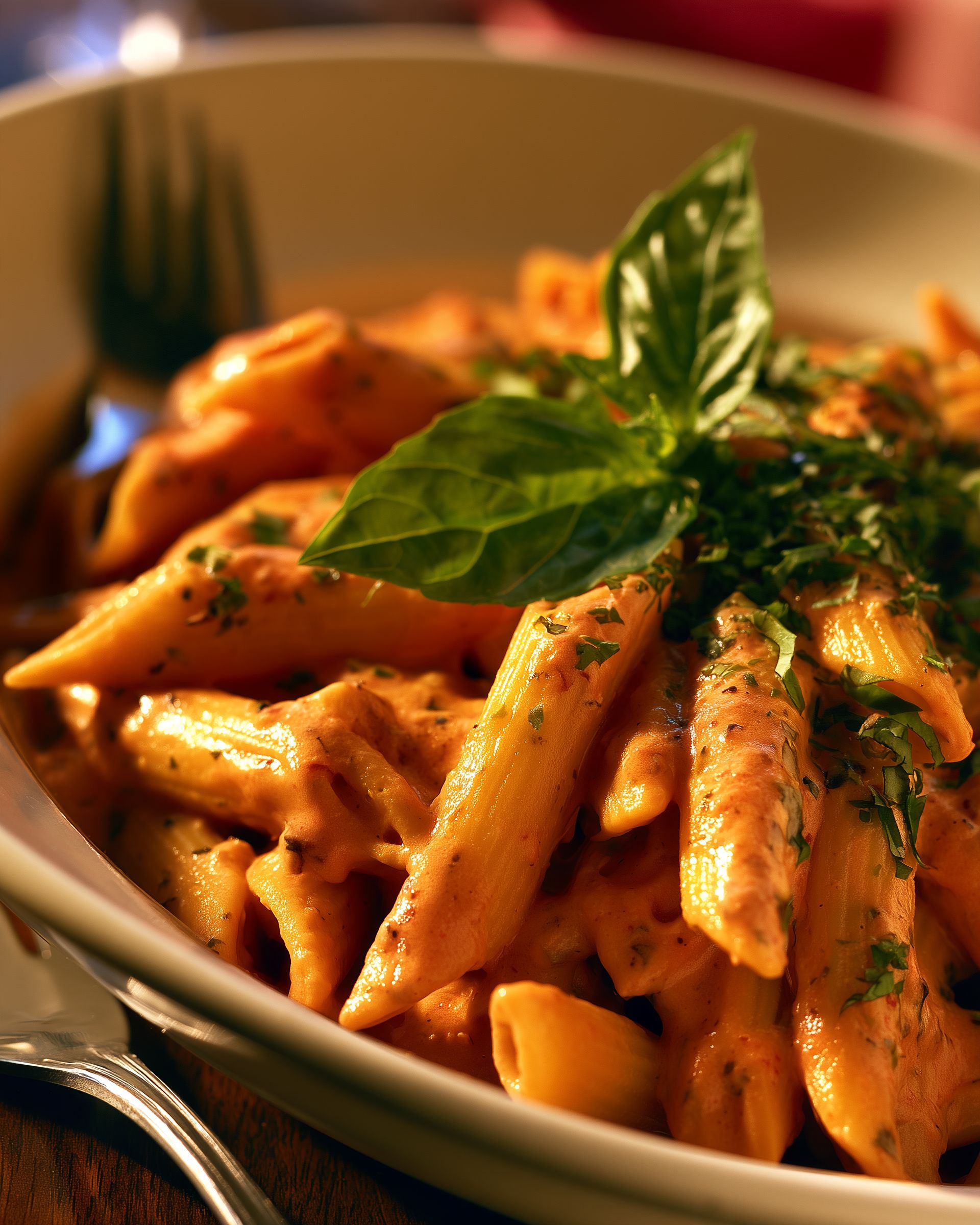
Penne alla Vodka
Nobody actually knows where this dish came from, and everybody who tells you otherwise, with total confidence, is guessing. New York claims it. Rome claims it. Bologna claims it. It surfaces sometime in the nineteen-seventies, already fully formed, as though it fell out of a disco ceiling fully assembled, and every story about its true inventor contradicts every other one. We serve it anyway. Nobody has ever once cared about its birth certificate while eating it.
Ingredients
- 400g penne
- 2 tablespoons olive oil
- 1 small onion, finely chopped
- 2 cloves garlic, minced
- ½ teaspoon chili flakes
- 60ml vodka
- 400g crushed tomatoes
- 100ml heavy cream
- 40g Parmigiano Reggiano, grated
- Fine sea salt
Serves 4.
Cookware Required
- la padella larga (wide skillet)
- la pentola grande (large pot, for the pasta water)
Method
Warm the olive oil in a wide skillet, and cook the onion and garlic gently until the onion turns soft and translucent. Stir in the chili.
Pour in the vodka, and let it bubble and reduce by about half -- do not rush this step, or skip it. The alcohol needs time to cook off, or the finished sauce will taste sharp and harsh rather than simply warm.
Add the crushed tomatoes and a pinch of salt, and simmer for fifteen minutes. Lower the heat, stir in the cream, and warm it through gently without letting the sauce return to a hard boil, which can cause it to split.
Meanwhile, cook the penne in well-salted water until just short of al dente. Drain, and toss with the sauce and the Parmigiano, loosening with a little pasta water if needed.
Quando Va Storto
If the sauce tastes sharp or boozy rather than warm and rounded, the vodka didn't reduce long enough before the tomatoes went in; give it more time at a proper bubble next time. If the sauce looks curdled or split rather than smooth, the cream met a sauce that was boiling too hard, or the cream itself was cold going into a hot pan; lower the heat before it goes in, and let it warm gently. And if the dish tastes flat, don't skip the Parmigiano at the end -- it does real work here, not just decoration.