Pizza Marinara
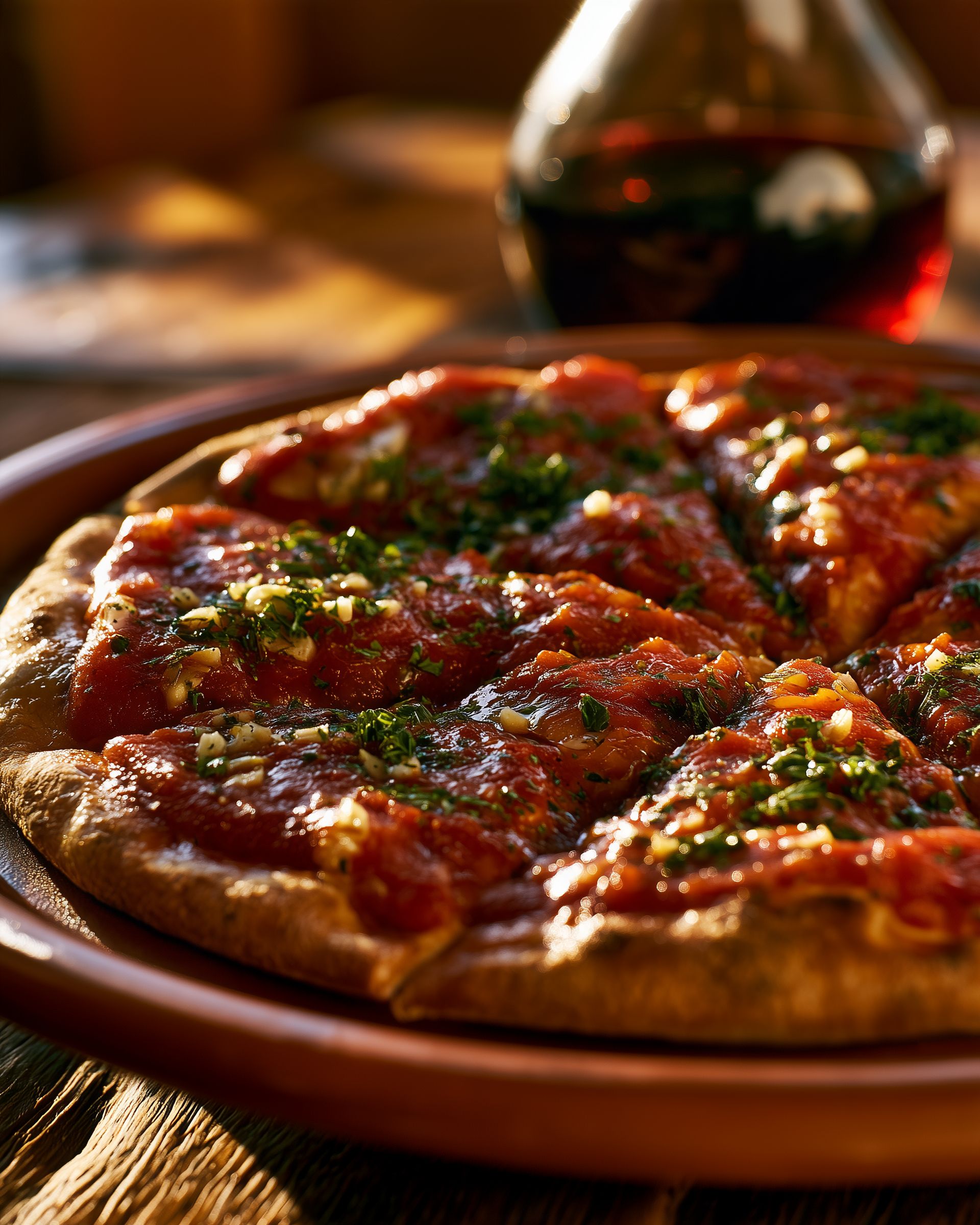
Customers ask for this one more cautiously than any other pizza on the menu, usually because they've heard the name and assumed, reasonably enough, that it involves the sea. It does not, and never did. Marinara means it was the pizza sailors ate before their ships left port -- cheap, quick, and, crucially, made without dairy that would spoil before they got where they were going. No fish has ever touched this pizza, and no cheese either, which is the other thing people find hard to believe when the plate arrives.
Ingredients
- 1 ball Impasto per Pizza a Lievitazione Lenta, risen and at room temperature
- 100g canned San Marzano tomatoes, crushed by hand
- 2 cloves garlic, very thinly sliced
- ½ teaspoon dried oregano
- Extra virgin olive oil
- Fine sea salt
- Semolina or flour, for dusting
Makes one 12-inch pizza.
Cookware Required
- la pietra o l'acciaio refrattario (pizza stone or steel)
- la pala per pizza (pizza peel)
- una ciotola piccola (a small bowl, for crushing the tomatoes by hand)
Method
Heat your oven and stone exactly as you would for the Margherita a few pages back -- there's no reason to explain the same thing twice. The only real difference here is what goes on top, and how little of it there is.
Crush the tomatoes by hand with a pinch of salt. Stretch the dough, transfer it to your floured peel, and spread the tomato thinly, right out to the edge this time -- there's no cheese here to protect the crust from the sauce, so a bare rim isn't necessary the way it is elsewhere.
Scatter the sliced garlic and oregano over the tomato, drizzle with olive oil, and slide it onto the hot stone or oven floor. Bake the same way -- watch it, not the clock -- until the crust blisters and chars and the garlic has softened without burning.
Quando Va Storto
If the garlic tastes bitter and sharp instead of mellow, it burned before the crust finished -- slice it thinner next time, or scatter it a minute or two into the bake rather than before. If the pizza tastes flat despite everything being technically correct, the tomatoes or the olive oil were not good enough to carry a dish with this few ingredients to hide behind; there is nowhere for a mediocre tomato to hide on a marinara. And if customers still ask where the cheese went, you now know exactly what to tell them.