Pollo alla Cacciatora
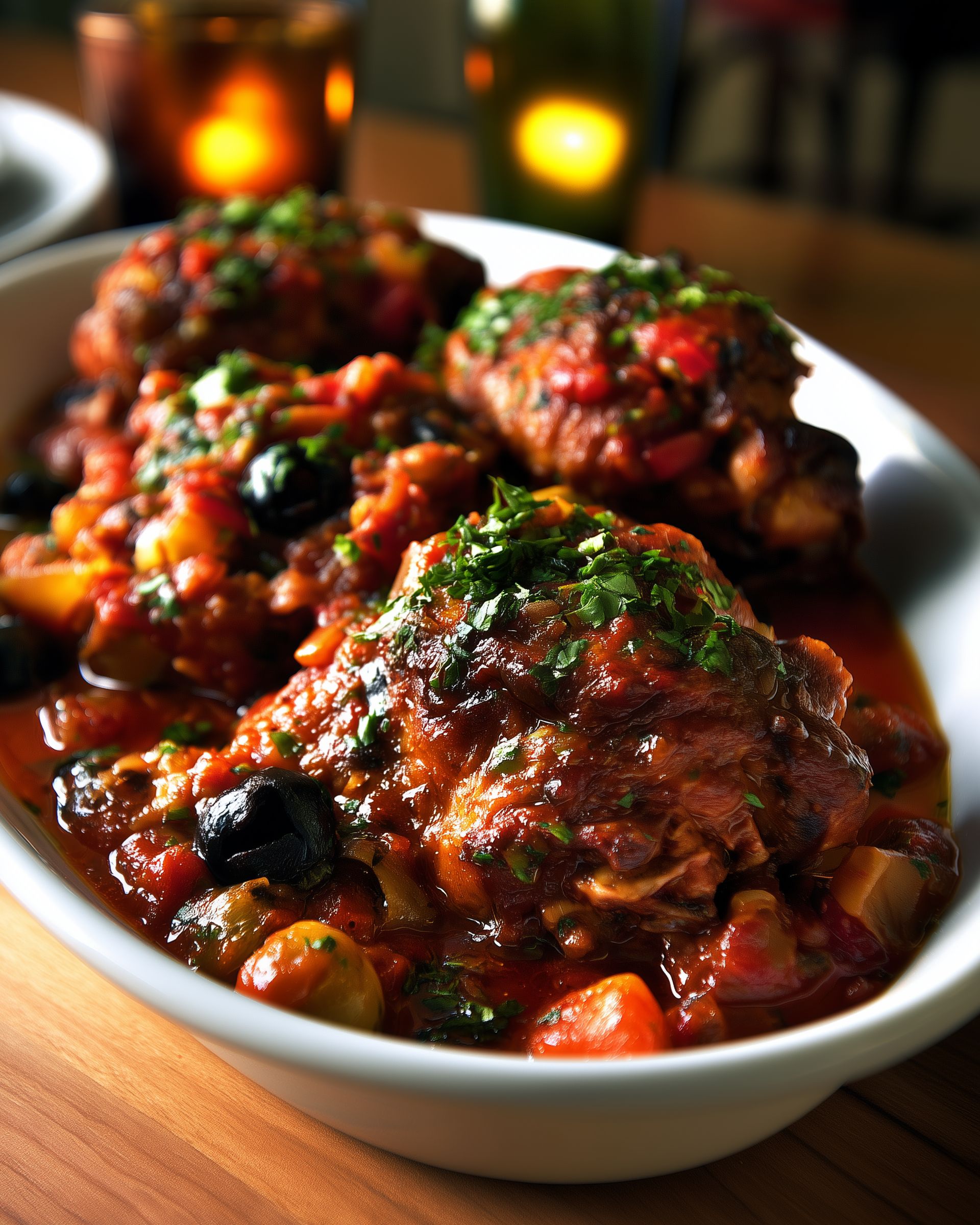
Cacciatora means hunter's style, and the story every Italian grandmother tells is the same one: a hunter comes home with nothing, and the family makes a proper dinner anyway out of whatever's already in the kitchen -- tomatoes, peppers, a little wine, and whatever bird happened to be on hand. Ours uses chicken, same as everyone's, and no one in this family has ever actually hunted anything more dangerous than a parking space in high season.
Ingredients
- 1.5kg chicken pieces, bone-in and skin-on (thighs and drumsticks work best)
- Flour, for dredging
- Olive oil
- 1 onion, sliced
- 2 bell peppers, sliced
- 200g mushrooms, sliced
- 3 cloves garlic, minced
- 150ml dry white wine
- 400g crushed tomatoes
- Fresh rosemary and sage
- Fine sea salt and black pepper
Serves 4–6.
Cookware Required
- una padella larga con coperchio (a wide pan with a lid)
- le pinze da cucina (kitchen tongs)
Method
Pat the chicken dry, season with salt and pepper, and dredge lightly in flour, shaking off the excess. Warm a generous amount of olive oil in a wide pan, and brown the chicken on all sides, working in batches if necessary so the pieces have room to color rather than steam. Set the chicken aside.
In the same pan, add the onion, peppers, and mushrooms, and cook until softened, about eight minutes, scraping up any browned bits left behind by the chicken -- that's real flavor sitting on the bottom of the pan, not something to wash away. Add the garlic and herbs, and cook for another minute.
Pour in the wine, and let it bubble for a minute or two, until the sharp smell of alcohol has mostly cooked off. Stir in the crushed tomatoes, and return the chicken to the pan, nestling it into the sauce.
Cover, and simmer gently for thirty-five to forty minutes, until the chicken is fully cooked and tender enough to pull easily from the bone. Taste, and adjust the seasoning before serving.
Quando Va Storto
If the chicken comes out dry or stringy, it simmered too hard, or for too long past the point of being done; a gentle simmer, not a boil, is what this dish wants throughout. If the sauce tastes thin and separated rather than unified, it needed more time uncovered at the end to reduce, or the wine wasn't given long enough to cook off before the tomatoes went in. And if the whole dish tastes flatter than it should, the chicken likely wasn't browned properly at the start; that first step isn't just about color, it's where a real portion of the dish's flavor actually comes from.