Polpette al Sugo
This is the dish that shows up, uninvited but welcome, whenever someone in this family has had a difficult week. Nobody needs to ask for it. Someone just starts rolling meatballs, and that's the whole conversation.
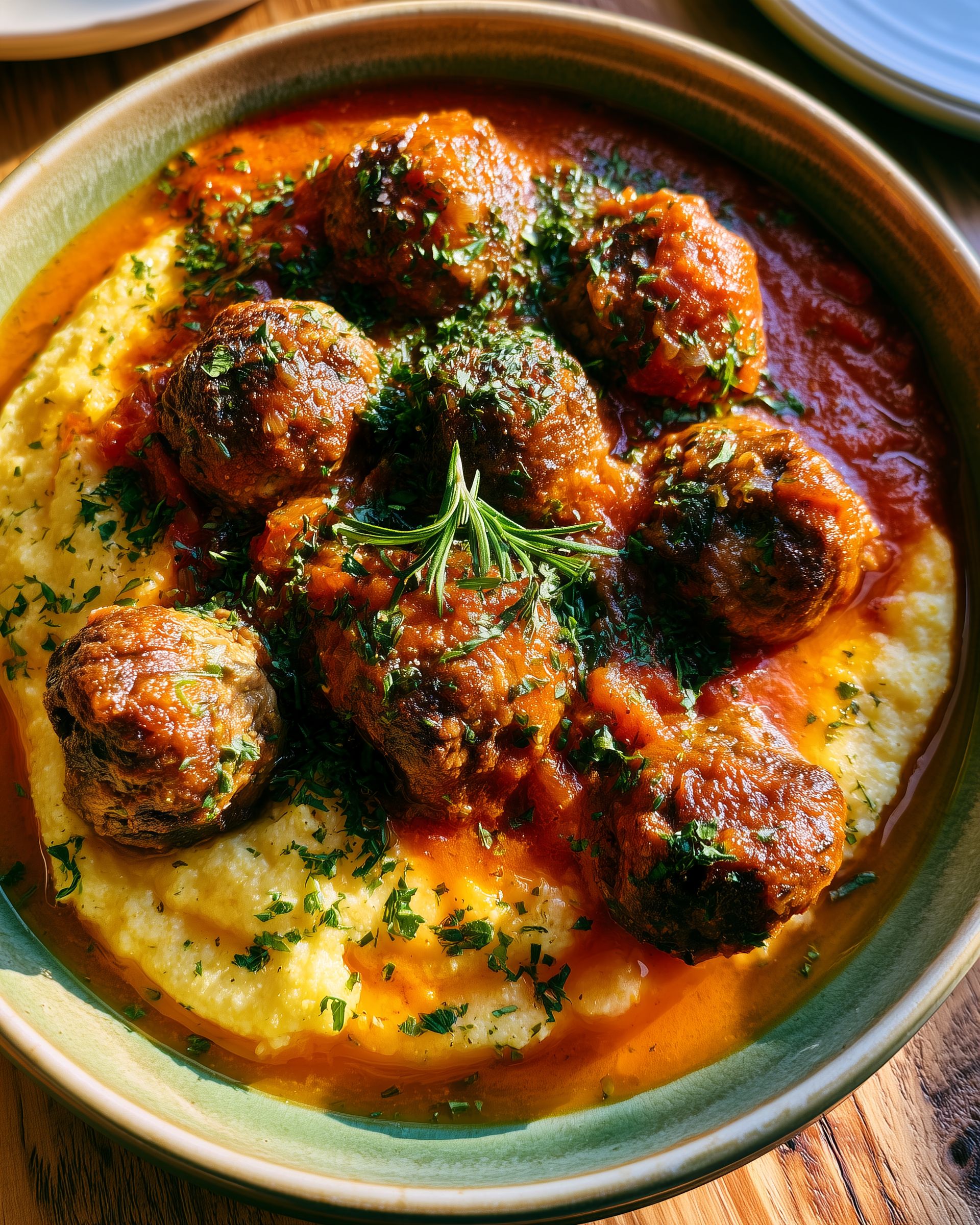
Ingredients
- 300g ground beef
- 200g ground pork
- 100g stale bread, soaked in milk and squeezed dry
- 1 egg
- 40g Parmigiano Reggiano, grated
- 2 cloves garlic, minced
- Fresh parsley, chopped
- Olive oil
- 500g crushed tomatoes
- 1 small onion, chopped
- Fresh basil
- Fine sea salt and black pepper
Serves 4–6.
Cookware Required
- una ciotola grande (a large bowl, for mixing)
- una padella larga (a wide pan)
Method
Combine the beef, pork, soaked bread, egg, Parmigiano, garlic, parsley, salt, and pepper in a large bowl. Mix gently with your hands, just until everything comes together -- overworking the mixture is what makes meatballs dense instead of tender. Roll into balls a little smaller than a golf ball.
Warm a little olive oil in a wide pan, and brown the meatballs in batches, turning them to color on all sides. You're not cooking them through at this stage, only building flavor on the outside. Set them aside.
In the same pan, soften the onion and a little more garlic, then add the crushed tomatoes, basil, and a pinch of salt, and bring to a simmer. Return the meatballs to the sauce, cover, and simmer gently for twenty-five to thirty minutes, until they're cooked through and the sauce has thickened around them.
Quando Va Storto
If the meatballs come out tough and dense, the mixture was overworked while shaping, or didn't have enough bread and milk to keep it tender. If they fall apart in the sauce, they weren't browned enough at the start to set their outside before the long simmer, or the mixture needed a bit more egg to hold together. And if the sauce turns out thin, it needed more time to reduce -- the meatballs release some liquid of their own as they finish cooking, and the sauce has to be given the chance to cook that back down.
Una Storia dalla Sala
Signor Rinaldi has sat at the same table every Thursday for eleven years, and before he does anything else -- before his coat comes off, before he says a word to anyone -- he moves his chair a few centimeters to the left, the exact same few centimeters, every time, as though the table drifts during the week and needs coaxing back into place. We learned a long time ago to have that table already set the way he needs it before he arrives: the fork here and not there, the water glass turned just so, the salt moved half an inch from wherever anyone else would leave it. He still nudges every piece into its final position himself once he sits, unhurried, and in eleven years nobody in this family has once suggested he skip the step, or asked him why he does it. Some people need quiet. Some people need a window. Signor Rinaldi needs the salt exactly there, and that has simply been true for as long as any of us can remember, the same way it's true that Tuesday comes after Monday.
Which is why the night we ran out of ground pork, twenty minutes before he was due to arrive, the whole kitchen went quiet in a way that had nothing to do with cooking. Polpette al sugo, every single Thursday, for eleven years -- and that night, none.
My sister Valentina went out to meet him at the door before he'd so much as looked at his table. She told me afterward she'd rather he hear it standing up, from a person, than sit down into the whole careful routine only to have it interrupted halfway through. She explained plainly what had happened, and offered the polpette made with beef alone instead of the usual mix of beef and pork, admitting honestly that it wouldn't taste quite the same. He was quiet for a moment, and then he said that different was fine, so long as someone had simply told him. He went to his table, sat down with a small sigh, and left his chair exactly where it was -- for the first time in eleven years, he didn't move it at all. The fork stayed exactly where we'd set it. The salt stayed exactly where we'd set it. Whatever else came and went that night -- the bread, the plates, Valentina refilling his water without being asked -- those two things simply sat untouched by his own hand, for the first time since any of us can remember, and none of us have ever quite agreed, since, on whether that was a good sign or a bad one.