Prosciutto e Melone
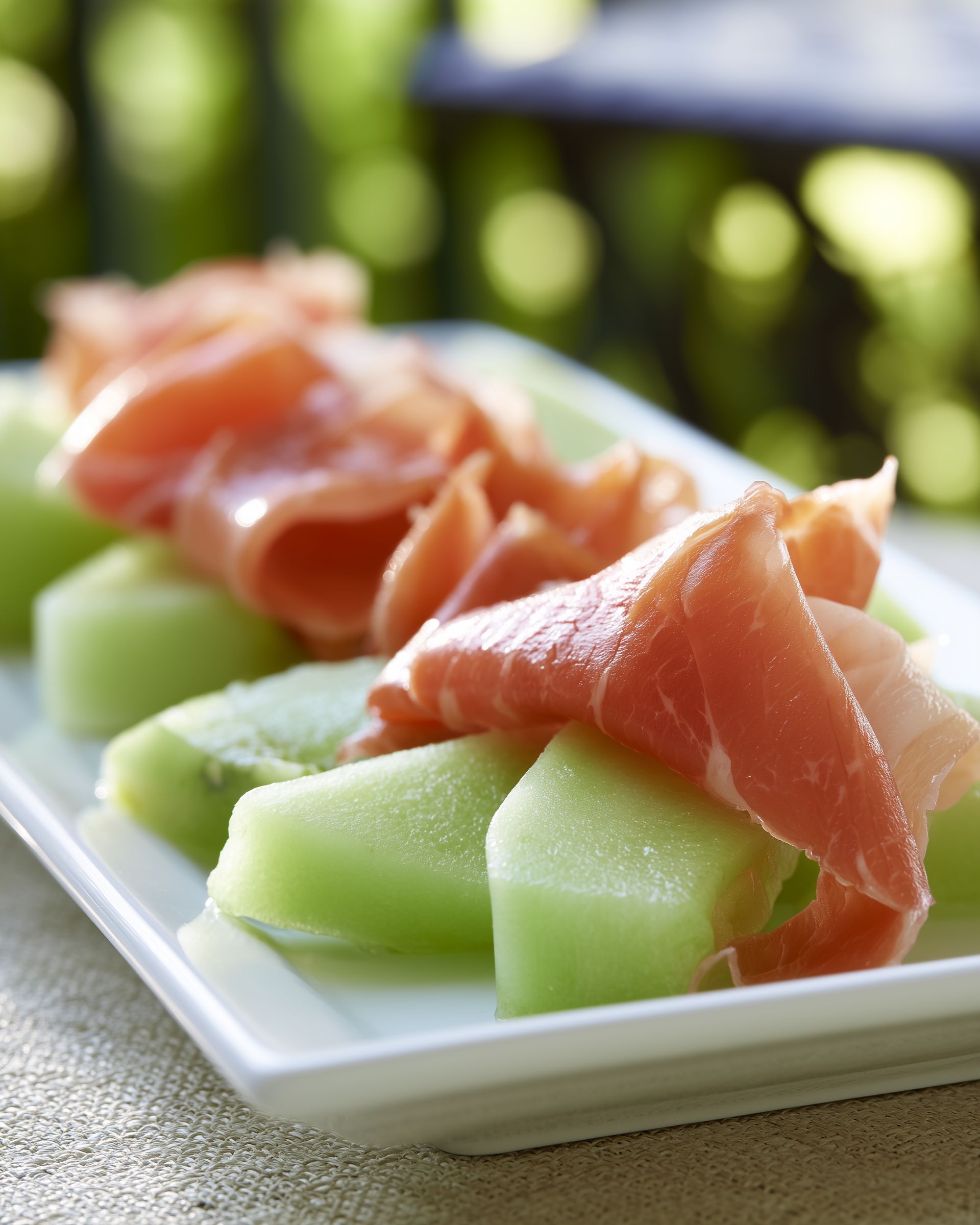
Every summer, someone new to the table asks whether we are serious about this combination before they've tried it, and every summer, they stop asking about halfway through the first piece. Sweet melon and salty, cured ham should not work as well together as they do, and I have long since stopped trying to explain why. Some things are simply correct, and this is one of them.
Ingredients
- 1 ripe cantaloupe or other sweet melon
- 150g prosciutto crudo, thinly sliced
- Freshly cracked black pepper (optional)
Serves 4 as a starter.
Cookware Required
- un coltello affilato (a sharp knife)
Method
Halve the melon, remove the seeds, and cut it into wedges or cubes, whichever you find easier to eat by hand. Drape a slice of prosciutto over or around each piece -- loosely, not tightly, so the ham keeps some of its own texture rather than clinging flat against the fruit.
Arrange on a platter, and finish with a crack of black pepper if you like it. Serve cold, or close to it; this is one of the very few dishes in this book that actually wants to be served straight from the refrigerator.
Quando Va Storto
If the combination tastes flat rather than genuinely good, your melon was underripe -- a melon that isn't sweet enough has nothing to balance against the salt of the prosciutto, and no amount of good ham fixes an unripe one. If the prosciutto tastes tough instead of melting against the fruit, it was sliced too thick; ask for it sliced properly thin, almost transparent, the way it's meant to be. And if you're tempted to cook this dish in any way -- warming the melon, searing the prosciutto -- resist it. This is one of the rare recipes in this book with nothing to fix by adding heat.
Una Storia dalla Sala
A tourist went suddenly, alarmingly pale in the middle of his prosciutto e melone, stood up so fast his chair nearly went over, and pointed urgently toward the back of the restaurant while saying a word that sounded almost like Italian but, on reflection, wasn't anything in particular. It took Lucia a beat too long to understand what he actually needed -- by that point he was well past being able to explain it in any language, including his own. She simply pointed down the back hallway, and he was gone before she'd finished raising her arm.
He returned several minutes later, considerably more composed, and apologized in surprisingly correct Italian -- the exact phrase, Lucia realized, that he'd clearly spent his entire walk back rehearsing, about thirty seconds too late to have been useful.