Ravioli di Ricotta e Spinaci
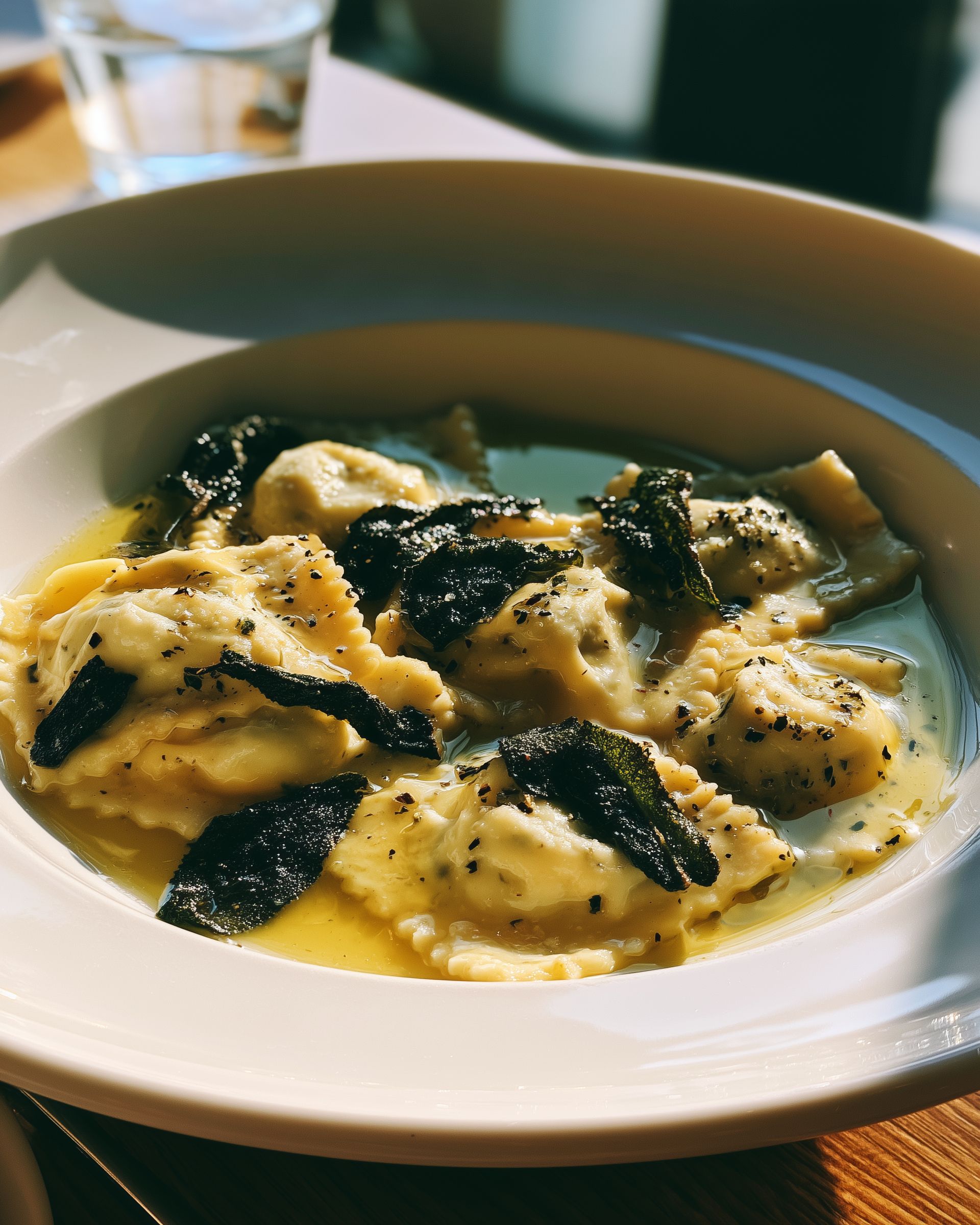
Simple enough that it's often the first filled pasta anyone in this family is trusted to make alone, and forgiving enough that it usually survives the attempt. Butter and sage on top, and nothing more -- a filling this good doesn't need to compete with anything.
Ingredients
- For the pasta: 300g “00” flour
- 3 eggs
- For the filling: 300g ricotta, well drained
- 200g spinach, cooked, squeezed dry, and chopped
- 60g Parmigiano Reggiano, finely grated
- 1 small egg
- A little grated nutmeg
- For the sauce: 80g butter
- A handful of fresh sage leaves
- Extra Parmigiano, to serve
- Fine sea salt
Serves 4–6.
Cookware Required
- il mattarello (a rolling pin (or a pasta machine))
- una rotella tagliapasta (a pasta wheel or sharp knife, for cutting)
- la pentola grande (large pot, for boiling)
Method
Make the pasta dough by mounding the flour, forming a well, and working in the eggs until smooth. Knead for eight to ten minutes, then rest it, wrapped, for thirty minutes.
Combine the ricotta, spinach, Parmigiano, egg, nutmeg, and a pinch of salt for the filling. It should hold together firmly when pressed; if it seems at all wet, drain the ricotta and spinach further before proceeding -- a wet filling is the most common reason ravioli split open.
Roll the dough thin, and lay small spoonfuls of filling in evenly spaced rows across one sheet. Lay a second sheet over the top, press firmly around each mound of filling to seal and push out any trapped air, then cut into squares or rounds.
Bring a large pot of well-salted water to a boil, and cook the ravioli in batches for two to three minutes, until they float and the pasta is tender. While they cook, melt the butter in a wide pan with the sage leaves over medium heat, until the butter turns a light golden brown and smells faintly nutty, and the sage turns crisp.
Drain the ravioli gently, and toss with the sage butter. Serve with more Parmigiano.
Quando Va Storto
If the ravioli burst while boiling, either the filling was too wet, or the edges weren't pressed firmly enough to seal out the air, which expands and splits the seam as it cooks. If the butter turns dark and bitter instead of golden and nutty, it browned too far -- watch it closely once it starts to foam, since the difference between perfect and burnt happens in under a minute. And if the dish tastes bland, season the filling itself properly -- salt added only to the pasta water afterward never fully reaches what's sealed inside.