Spaghetti alla Carbonara
Someone in this family, every single time we travel outside Italy, orders carbonara at some restaurant abroad out of habit, and every single time, they regret it before the plate is halfway finished. Cream does not belong anywhere near this dish, and a kitchen that adds it has made a different, perfectly fine pasta that has simply borrowed a name it didn't earn.
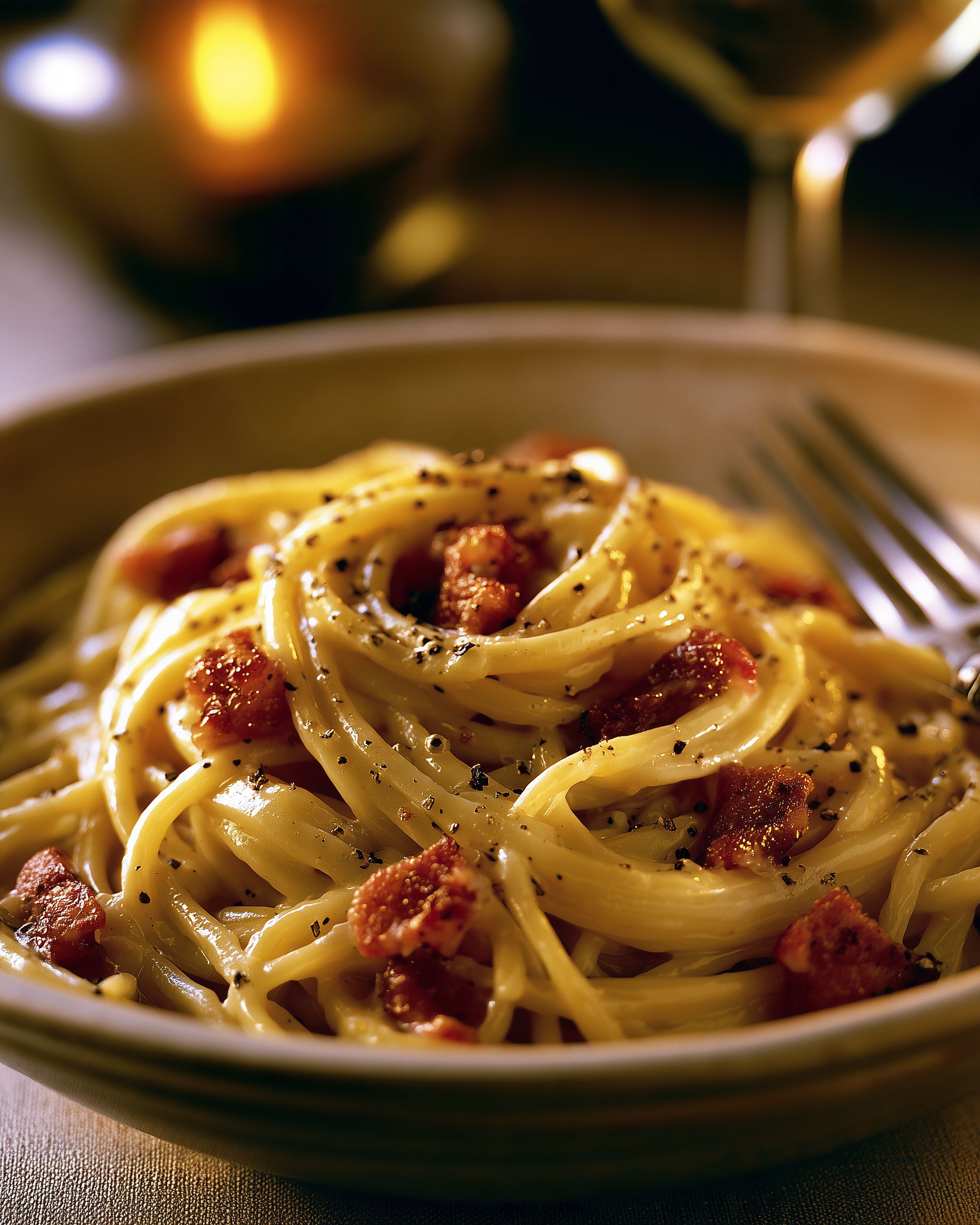
Ingredients
- 400g spaghetti
- 150g guanciale, cut into small strips
- 4 egg yolks, plus 1 whole egg
- 80g Pecorino Romano, finely grated, plus more to serve
- Plenty of freshly cracked black pepper
- Fine sea salt
Serves 4.
Cookware Required
- la pentola grande (large pot, for the pasta water)
- la padella larga (wide skillet)
- una ciotola (a bowl, for the egg mixture)
Method
Bring a large pot of well-salted water to a boil, and cook the spaghetti until just short of al dente.
Meanwhile, cook the guanciale in a dry skillet over medium heat -- no oil needed, it renders its own -- until the fat has melted out and the pieces turn crisp and golden. While it cooks, whisk the egg yolks, whole egg, Pecorino, and a generous amount of black pepper together in a bowl.
Scoop out at least a cup of the pasta water before draining. Remove the skillet from the heat entirely -- this is the single most important instruction in the recipe -- and add the drained pasta directly to the guanciale and its fat, tossing to coat.
Let the pan cool for a few seconds, off the heat, then pour in the egg mixture, tossing continuously and adding pasta water a little at a time, until the sauce turns glossy and coats every strand -- this should take less than a minute. If it looks like it's beginning to scramble rather than emulsify, the pan is still too hot; pull it further from any heat source and keep tossing. Serve immediately, with more Pecorino and pepper on top.
Quando Va Storto
If the eggs scrambled instead of forming a sauce, the pan was still too hot when they went in -- carbonara is built entirely on residual heat, not direct heat, and there is no recovering a batch that has already curdled. If the sauce is thin and watery rather than glossy and clinging, you added too much pasta water too quickly, or didn't toss vigorously enough to build the emulsion. And if the dish tastes flat, you likely under-seasoned with pepper -- carbonara wants it genuinely assertive, not a polite dusting.
Una Storia dalla Sala
Two tourists made it perhaps six bites into a proper carbonara before setting their forks down almost simultaneously, having what looked, from across the room, like a small shared moment of personal crisis. One of them admitted to Matteo, a little sheepishly, that neither of them had actually ever liked pasta -- they had simply assumed, reasonably enough, that Italy was where that would finally change. Matteo took the confession with considerably more grace than most of us would have managed, and quietly swapped their order for two plates of branzino instead.
They left, by all appearances, pleased with the meal, and Matteo has told this story often enough since that "the carbonara people" has become permanent kitchen shorthand for exactly this kind of tourist.