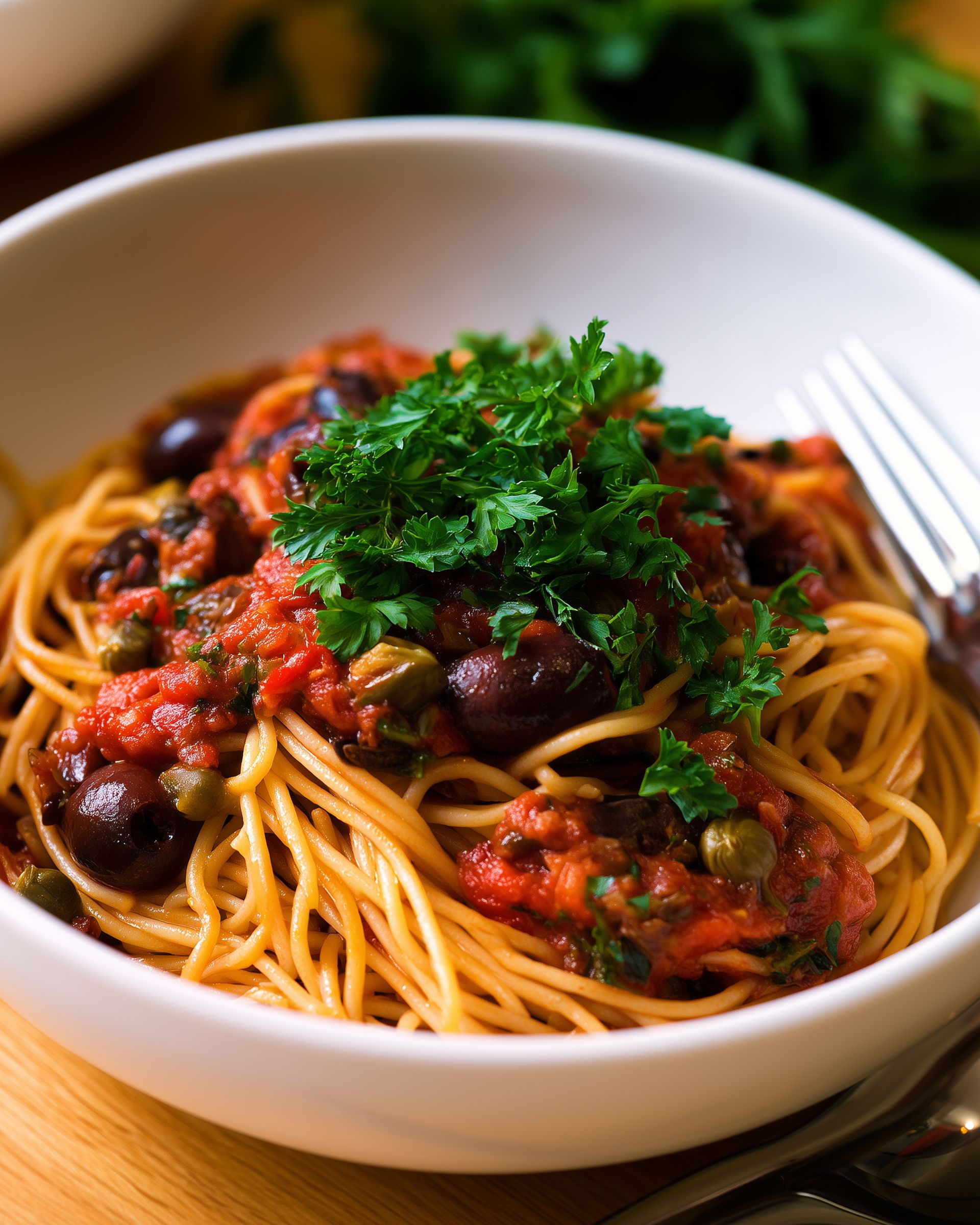
Spaghetti alla Puttanesca
Every family in Naples has its own story about where this dish gets its name, and none of them are entirely comfortable to repeat at a family dinner, so I will simply say that the name translates roughly to “in the style of the working woman,” and leave it to you to look up why, if you're curious enough.
Ingredients
- 400g spaghetti
- 4 tablespoons olive oil
- 3 cloves garlic, minced
- 4 anchovy fillets
- 2 tablespoons capers, rinsed
- 150g black olives, pitted and roughly chopped
- ½ teaspoon chili flakes
- 400g crushed tomatoes
- Fresh parsley, chopped
- Fine sea salt
Serves 4.
Cookware Required
- la pentola grande (large pot, for the pasta water)
- la padella larga (wide skillet)
Method
Warm the olive oil in a wide skillet over medium-low heat, and add the garlic and anchovies. Cook gently, stirring, until the anchovies have all but dissolved into the oil.
Add the capers, olives, and chili, and stir for a minute. Add the crushed tomatoes, and simmer for fifteen minutes.
Meanwhile, cook the spaghetti in well-salted water until just short of al dente. Scoop out some pasta water, drain, and toss the pasta into the sauce, loosening with a little pasta water if needed. Taste before adding any further salt -- the olives, capers, and anchovies have already done most of that work. Finish with parsley.
Quando Va Storto
If the dish tastes overly salty, you added salt without tasting first -- the anchovies, capers, and olives are salty enough on their own that this sauce rarely needs any more. If the anchovies taste sharply fishy rather than simply savory, they were browned too aggressively rather than gently melted into the oil; lower the heat next time. And if the sauce tastes flat, it needed the full simmer -- rushing this one loses the depth that the olives and capers are supposed to build.
Una Storia dalla Sala
A guest asked, entirely without embarrassment, whether the kitchen had any ketchup for his puttanesca, and was told, as gently as possible, that it did not. He simply reached into his jacket and produced a small travel bottle of his own, apparently packed for exactly this contingency. My father, passing at precisely that moment, opened his mouth to say something he would very likely have regretted, thought better of it, and decided a stranger's private culinary tragedy was not, in the end, his to correct.
The man finished the entire plate, ketchup and all, tipped generously, and left no less convinced of his own good judgment than when he'd arrived.