Tagliatelle Alfredo
My father will tell you, given the smallest opening, that a Roman named Alfredo di Lelio invented this dish in 1908, for a wife who had just given birth and could not be persuaded to eat anything at all, and that there was no cream anywhere near it, and that whatever is sold in a jar in America under this name ought, by law, to be called something else. He is not wrong. The original was fettuccine, a genuinely shameless quantity of butter, and Parmigiano Reggiano, and nothing more -- the sauce was never truly a sauce at all, but pasta water and cheese and butter becoming one, right there on the plate, in front of you.
Do not ask us why it is tagliatelle Alfredo in this house, and fettuccine everywhere else in the world. In our kitchen there exists only one shape of long pasta, and you have already been introduced to it.
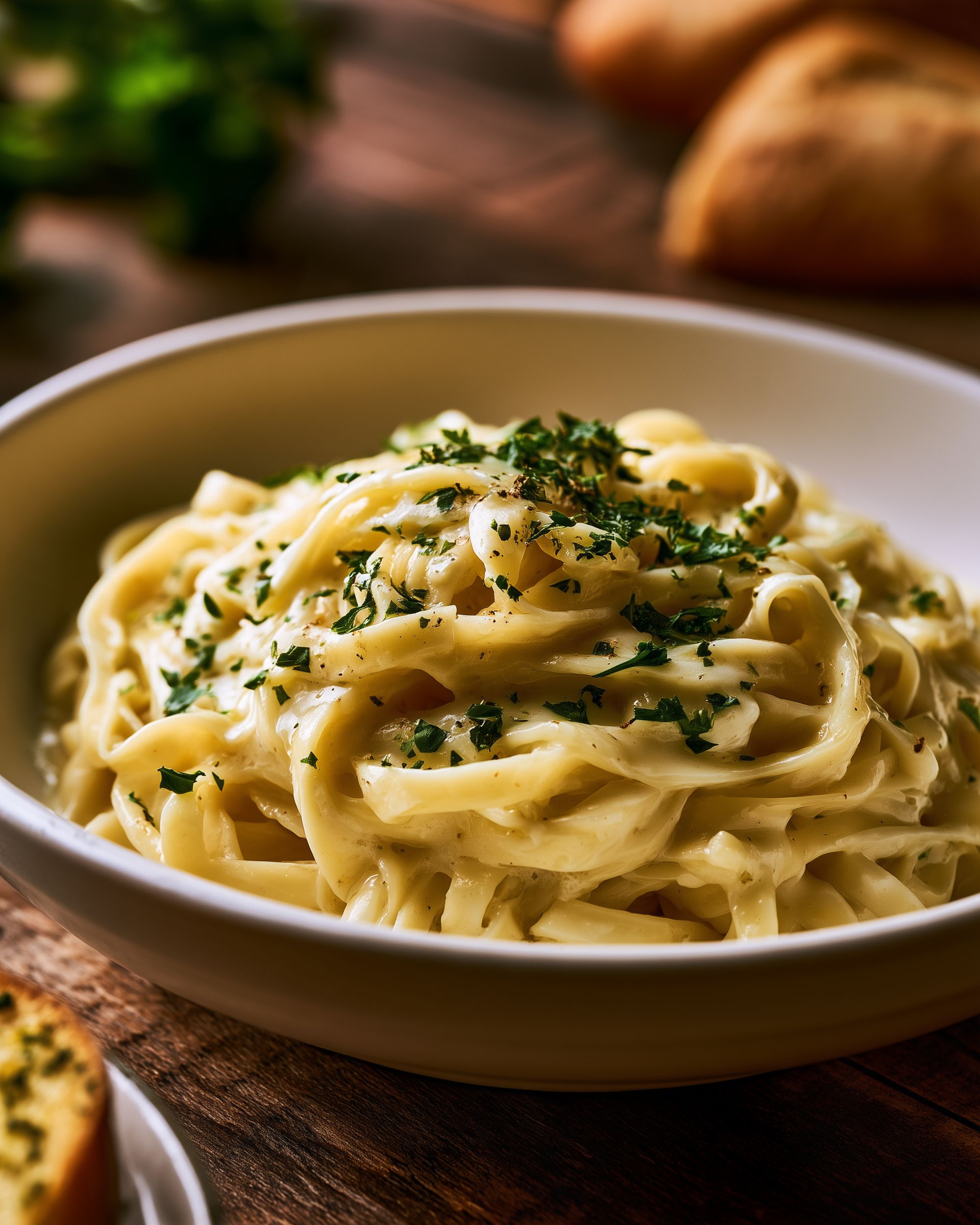
Ingredients
- 400g fresh tagliatelle
- 115g unsalted butter, cut into pieces
- 150g Parmigiano Reggiano, finely grated, plus more to serve
- Salt, for the pasta water
- Black pepper, if you insist on it (my father does not consider this traditional, and makes certain everyone is aware of it)
Serves four as a side, or two as a meal on the nights nobody feels like cooking anything more complicated.
Cookware Required
- la pentola grande (large pot, for the pasta water)
- la padella larga (wide skillet)
- le pinze da cucina (kitchen tongs, for tossing)
- lo scolapasta (colander)
- la grattugia (grater, for the Parmigiano)
Method
Bring a large pot of water to a boil, and salt it properly. Forget what you have heard about the sea -- real seawater runs about three and a half percent salt, which would make this dish inedible, not seasoned. Aim instead for around ten grams of salt per liter of water, roughly a heaping teaspoon per quart: enough that it tastes clearly seasoned when you taste it off the spoon, not enough to make you wince. This is not a place to save the salt for later; there is no later in this recipe, only now.
Cook the tagliatelle until just short of al dente, a minute less than the package suggests, if it is dried; thirty seconds, if it is fresh. It will finish cooking in the pan, and pasta that has been overcooked cannot be argued back into shape.
While the pasta cooks, melt the butter in a wide, low pan over the gentlest heat available to you. It should melt, not fry; if it begins to brown, or to smell of anything nutty, remove the pan from the heat entirely until you need it.
Scoop out at least a cup of the pasta water before you drain -- this is, in truth, the most important ingredient in the dish, and the one recipe cards habitually forget to mention. Drain the pasta, and add it directly to the pan with the butter.
Off the heat, add a small handful of the Parmigiano and a splash of the hot pasta water, and toss -- properly toss, lifting and turning, not merely stirring -- until it disappears into the pasta entirely. Continue adding cheese and water in small amounts, a little of each at a time, tossing without pause, until every strand is coated in something glossy, and clings to the fork rather than sliding from it. You are not melting cheese onto pasta. You are building an emulsion, the same as any other, and it will break if you rush it, or if the pan is too hot when the cheese is added.
Taste before adding pepper. My father omits it. Most of the rest of us do not. Serve the moment it is ready -- this dish does not wait for the table; the table waits for it.
Quando Va Storto
If the cheese clumps into a stringy, greasy mess instead of turning glossy, the pan was too hot when it went in, or you added it all at once rather than gradually; remove the pan entirely from the heat, add another splash of the hot water, and toss firmly until it comes back together, which -- almost always -- it will. If the sauce turns thin and watery, and refuses to cling to the pasta, you have not used sufficient cheese, or the water was not, in truth, real pasta water; there is no repairing a thin batch except by adding more cheese, slowly, away from the heat. And if it tastes gritty rather than silky -- ecco, this is the most common mistake of all -- the Parmigiano was not grated finely enough, or else it met a pan still too hot, and seized instead of melting.
An excellent plate on its own, and an even better one beside garlic bread hot from the oven -- this is what goes out fastest on the nights the pass is already shouting Forza! at everybody.