Torta Pasqualina
Legend says the original dough for this had thirty-three layers, one for every year of Christ's life, rolled so thin you could read through it. My mother has never once attempted this, and has strong opinions about anyone who claims they have. Store-bought puff pastry does the job honestly enough, and nobody at our table has complained yet.
Ingredients
- 2 sheets puff pastry
- 800g Swiss chard or spinach
- 1 small onion, finely chopped
- 2 tablespoons olive oil
- 400g ricotta, well drained
- 60g Parmigiano Reggiano, grated
- A little grated nutmeg
- 5 eggs (4 whole, for the wells; 1 beaten, for the filling and egg wash)
- Fine sea salt and black pepper
Serves 6–8.
Cookware Required
- una tortiera o uno stampo a cerniera (a pie dish or springform pan)
- il pennello da cucina (a pastry brush, for the egg wash)
Method
Wilt the chard or spinach with the onion in the olive oil until tender, about eight minutes. Season, let it cool, then squeeze out as much excess water as you can -- this matters more than it sounds, since a wet filling is the main reason this pie ends up with a soggy bottom. Chop roughly, and combine with the ricotta, Parmigiano, nutmeg, one beaten egg, salt, and pepper.
Line your dish with one sheet of puff pastry, letting the edges overhang. Spread the filling evenly across it, and use the back of a spoon to press four shallow wells into the surface, spaced apart. Crack a whole egg into each well, and season each with a small pinch of salt.
Cover with the second sheet of pastry. Fold the overhanging bottom edge up and over the top layer, pressing to seal all the way around. Brush the top with beaten egg, and cut a small vent in the center to let steam escape.
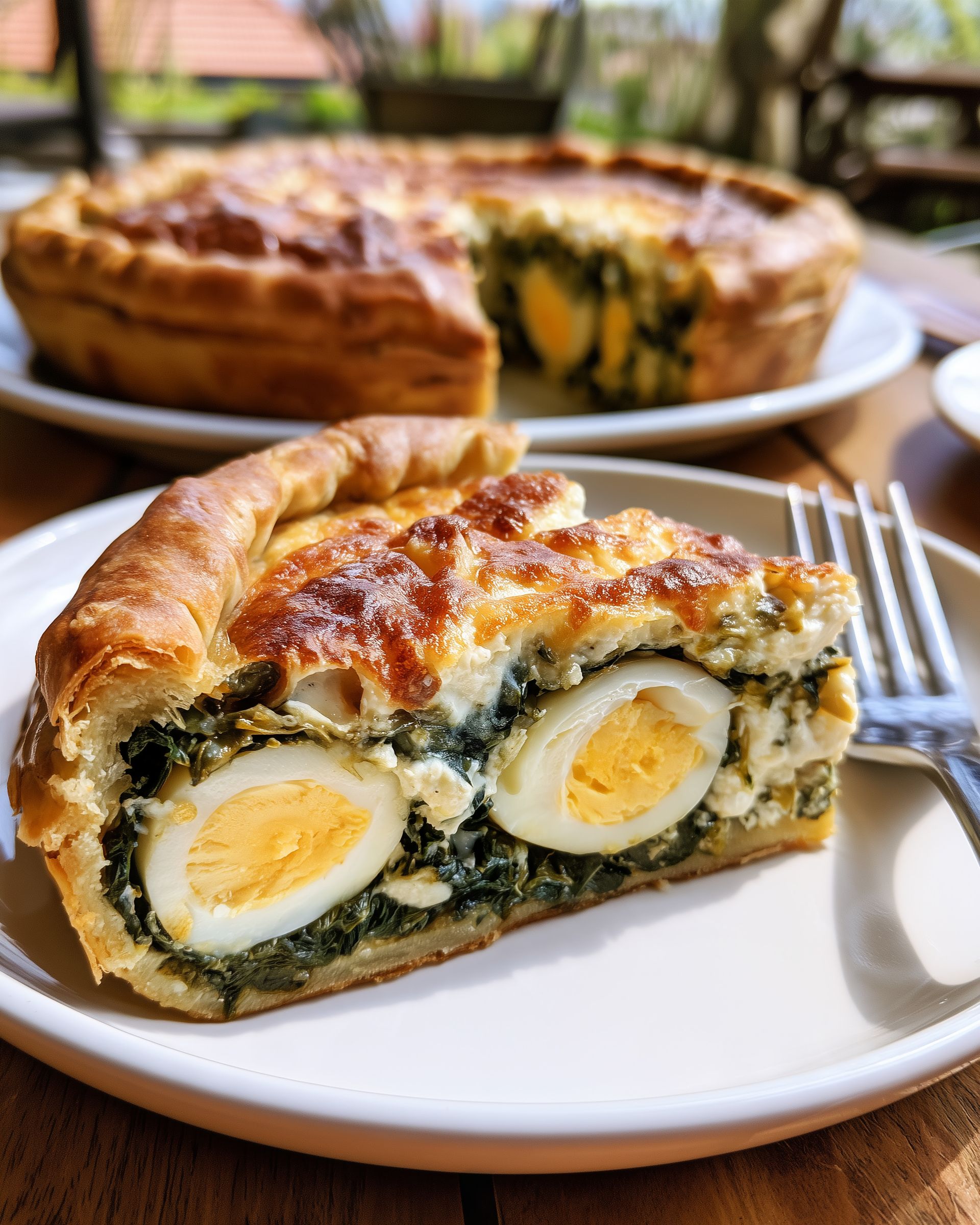
Bake at 180°C (350°F) for fifty to sixty minutes, until deeply golden all over. Let it cool completely before slicing -- this is not optional. A torta pasqualina cut while still hot loses its shape entirely, and the whole point of this dish is the clean cross-section of egg revealed in every slice.
Quando Va Storto
If the bottom crust turns soggy, the greens weren't squeezed dry enough before going into the filling. If the eggs in the center come out chalky and overcooked rather than soft, the pie was left in too long past the point the pastry was already properly golden -- judge doneness by the crust, not by guessing at the eggs underneath it. And if the pie collapses or the eggs smear together when you cut into it, it wasn't given enough time to cool and set before slicing; this dish rewards patience more than almost anything else in this book.